Scaling Storage Capacity to Meet Changing Customer Needs



Customer challenge
Philip Morris ČR a. s., the leading manufacturers of tobacco and smoke-free products in the Czech market, needed additional on-site storage capacity within a short timeframe.
The customer required a solution that could be implemented without disrupting ongoing operations, while allowing capacity to adapt as its requirements evolved. Building permanent infrastructure or renting external warehouse space would have required more time and offered less flexibility.
The solution
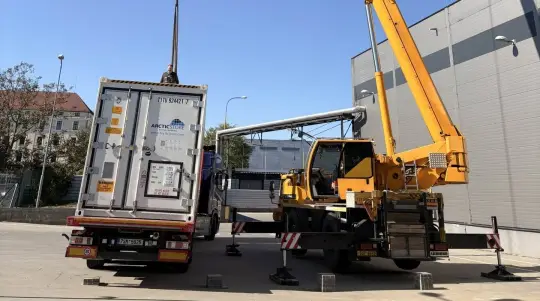
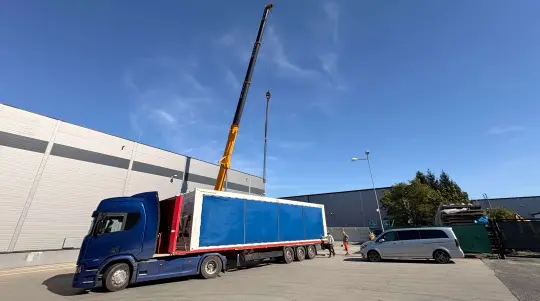
TITAN Containers initially supplied a SuperStore 3, providing additional storage capacity at the customer’s site. The installation was completed on 12 February 2026.
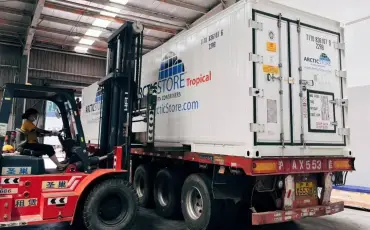
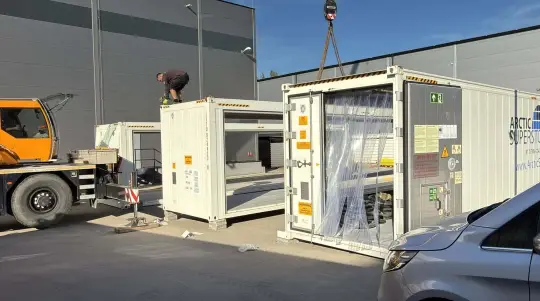
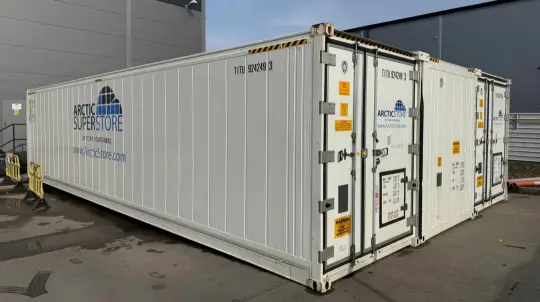
As the customer’s needs changed, further capacity was required urgently. Following a review meeting in April, TITAN arranged three additional 40’ ArcticStore refrigerated containers, which were delivered, installed and operational by 28 April.
The project continued to evolve. To meet the need for greater long-term capacity, the original SuperStore 3 was replaced with a larger SuperStore 4, which became operational on 1 October 2026.
Results
The project demonstrates how TITAN adapted its solution as the customer’s storage requirements changed throughout 2026.
- 12 February: Initial SuperStore 3 installed and operational.
- 28 April: Three additional 40’ ArcticStore refrigerated containers operational.
- 1 October: Larger SuperStore 4 installed and operational, increasing cooling and storage capacity.
Throughout the process, close collaboration between the customer and TITAN’s sales, operations and delivery teams supported the successive installations and changes.
A flexible, long-term partnership
Rather than delivering a one-off storage solution, TITAN worked with Philip Morris ČR as its requirements evolved, providing additional capacity when needed and subsequently upgrading the original installation.
The project illustrates the value of modular, rental-based storage for businesses that need to respond to changing operational requirements without committing to permanent infrastructure.