Maintaining battery performance in maritime operations through controlled storage
by Rasmus Nørgaard
Temperature-controlled infrastructure supporting shipyard operations
Shipyards building modern vessels increasingly rely on battery systems as part of electrification and hybrid propulsion solutions. These systems require controlled storage conditions to maintain performance and safety prior to installation.
In Turkey, several major shipyards faced a common operational constraint: they needed to store batteries within a stable temperature range, but lacked the space or permits to build dedicated storage facilities on site.
The challenge
Battery systems are sensitive to temperature fluctuations. To preserve chemical stability and ensure optimal performance, they must be stored within a controlled range of approximately +15C to +20C.
For shipyards, this created a practical challenge:
• No available space to construct new storage facilities
• Restrictions or lack of permits for additional buildings
• Need to keep batteries close to production areas
• Requirement for consistent, controlled conditions year-round
Without a suitable on-site solution, batteries would have had to be stored in external facilities, introducing additional handling, transport complexity, and reduced operational control.
The solution
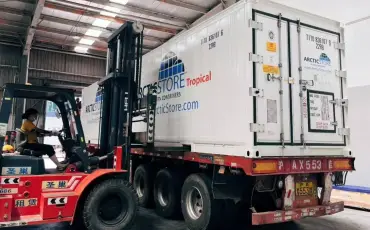
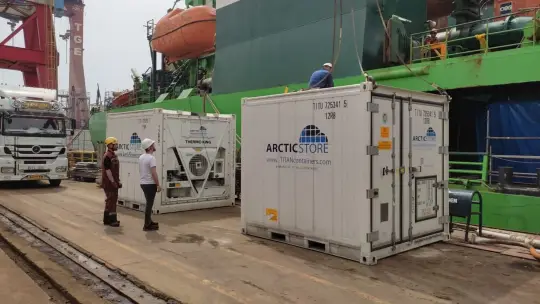
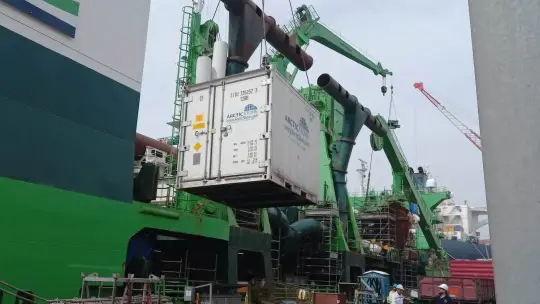
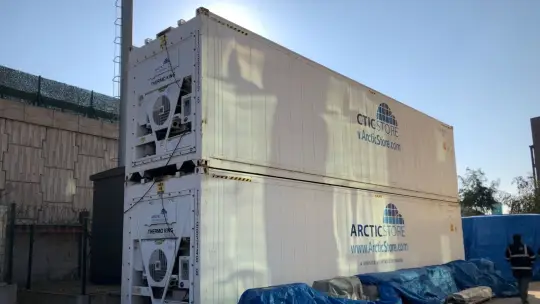
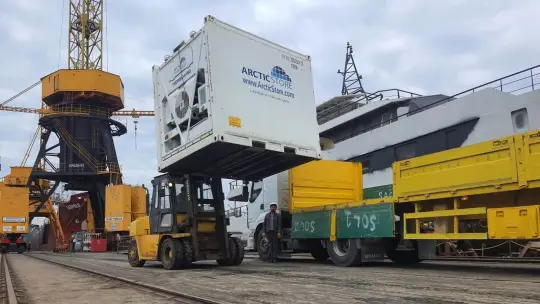
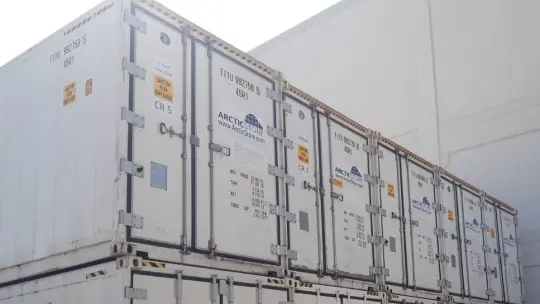
To address this requirement, shipyards implemented ArcticStore temperature-controlled containers positioned directly within their operational areas.
The container-based setup provided a stable internal environment aligned with battery storage requirements, while allowing the shipyards to avoid permanent construction.
In addition, the solution was supported by SmartArctic remote monitoring, enabling continuous oversight of temperature conditions and operational status. This provided an added layer of control and reassurance that storage conditions remained within the required range.
The flexibility of the solution enabled:
• Deployment within existing site constraints
• Immediate availability without permitting delays
• Storage capacity aligned with project needs
• Easy integration into ongoing shipbuilding workflows
The result
With controlled storage in place, the shipyards were able to maintain battery condition and performance prior to installation.
The solution enabled:
• Stable storage conditions within the required temperature range
• Reduced risk of battery degradation
• Improved operational efficiency with on-site access
• Continuous monitoring and control of storage conditions
• Avoidance of infrastructure investment and external storage dependencies
Today, the solution is used across multiple shipyards, supporting ongoing vessel construction projects that rely on battery systems.
Supporting electrification in maritime industries
As shipbuilding evolves toward electrification, infrastructure requirements are changing.
This case demonstrates how temperature-controlled storage can support new energy technologies within existing industrial environments — enabling shipyards to maintain performance standards without modifying site infrastructure.