Cold chain 101: how to keep products safe from storage to delivery
Cold chain logistics ensures temperature-sensitive goods like food and pharmaceuticals remain safe, effective, and compliant from production to delivery. This guide explains how cold chain systems work, key risks of temperature failure, and best practices for storage, transport, and monitoring.
A reliable cold chain is essential for protecting temperature-sensitive goods from the point of manufacture through to final delivery.
Whether you’re transporting vaccines, fresh produce, dairy, meat or specialist chemicals, maintaining the correct temperature range is critical to product safety, quality and regulatory compliance.
This guide explains how cold chain logistics works, why it matters, and how businesses can implement effective cold chain solutions across storage, handling and transportation.
Why you can trust us: TITAN’s role in the cold chain is long established. Our range of cold storage containers keeps products at the right temperature for thousands of clients in multiple sectors worldwide.
What is cold chain management & logistics?
Cold chain management refers to the coordinated process of storing and transporting products within a defined temperature range to preserve their integrity.
In simple terms, certain goods – including vaccines and many food products – become unsafe or ineffective if they do not stay within a set temperature range during their lifecycle.
Cold chain logistics includes the infrastructure, equipment and monitoring systems required to maintain those temperatures throughout the supply chain, including:
Whenever businesses manufacture or handle temperature-sensitive items, they have a responsibility to their customers to make sure they never become too hot or too cold.
The same is true for everyone else who handles the goods – right up to the moment they are bought by the end user.
Temperature deviations can lead to:
Microbial growth in food
Loss of potency in pharmaceuticals (vaccines becoming ineffective, for example)
Structural damage from freezing
Reduced shelf life
Regulatory breaches
The financial and operational impact of failure can be significant. For a practical breakdown of risks – and consequences – check out our guide to the true cost of cold storage failures.
Cold chain best practices are not optional in regulated industries; they are a compliance requirement. Reputational and financial losses are real consequences, with potentially trillions lost annually across all industries.
Last-mile delivery in insulated or refrigerated vans
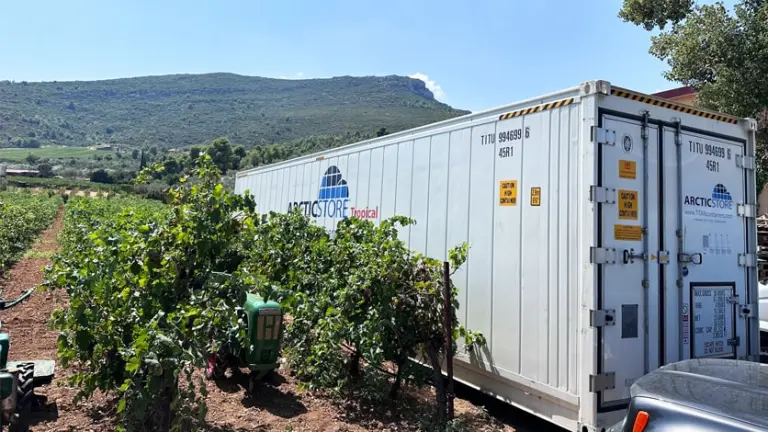
It is important to note that many reefer containers – such as the ArcticStore cold storage system – in use globally are designed for static use.
These ‘holding bays’ are a critical part of the cold chain. While they can be taken to a site on the back of a vehicle, they are not intended for transporting temperature-sensitive items.
What are the two types of cold chain?
Cold chain systems fall into two main categories:
Active cold chain
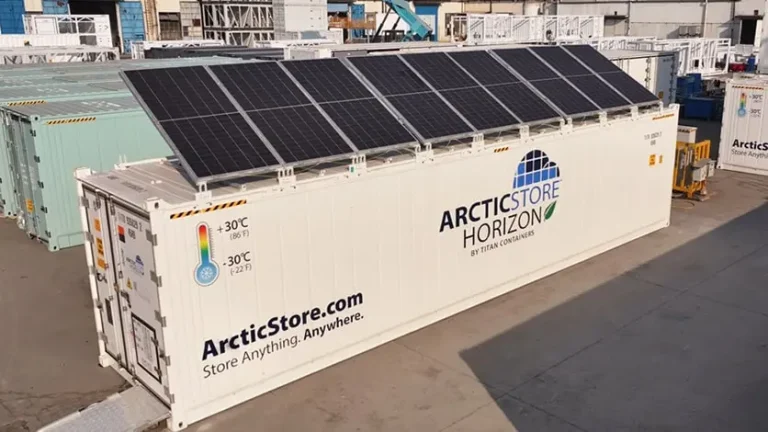
These use mechanical refrigeration powered by electricity to maintain temperatures. Examples include warehouse cold rooms and temperature-controlled refrigerated container units, such as the energy-efficient ArcticStore Horizon container collection.
Passive cold chain
This type uses insulated packaging and phase change materials (such as gel packs or dry ice) without continuous power. Passive systems are typically used for short-duration transport.
It’s worth noting, however, that definitions vary. The two types of cold chain are sometimes understood as the frozen cold chain, for products kept at 0°C or below, and the chilled cold chain, for items stored at 8°C or below.
Key stages of the cold chain lifecycle
Maintaining temperature integrity requires control at every stage. Here, we explain the many components that can make up a modern cold chain.
Temperature-controlled storage
Warehouses
Cold storage warehouses are often designed with zoned environments (such as chilled, frozen and controlled room temperature bays). They use calibrated probes, airflow management and alarm systems to ensure temperatures don’t deviate from acceptable levels.
Pros and cons: While this kind of solution can be built to precise specifications, it also requires planning approval and may be difficult to expand or reduce as needs change.
Refrigerated containers
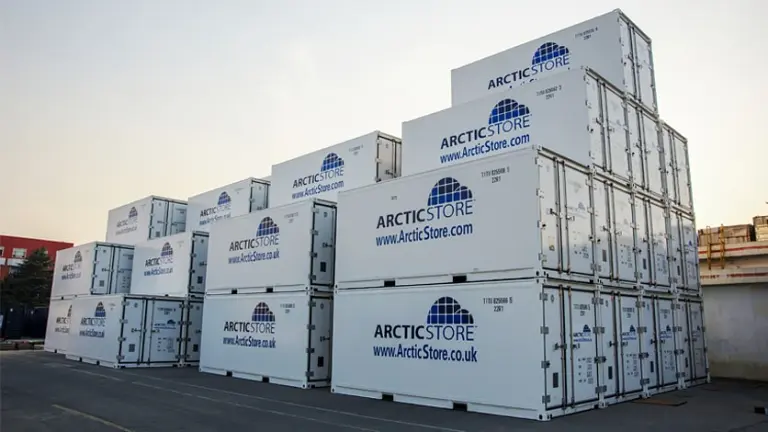
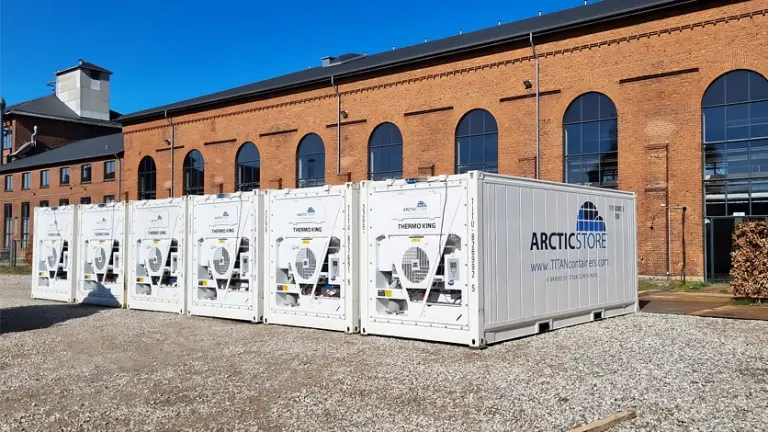
Refrigerated containers provide flexible, scalable cold storage. They are commonly used for overflow capacity, seasonal demand and temporary projects – though they are increasingly seen as a permanent solution, thanks to the multi-year lifespan of modern units.
Pros and cons: Highly flexible and adaptable, reefer containers can be positioned exactly where needed – indoors or outdoors – and, in some cases, offer the same kind of zoned environments (blast freezing and chilling, for example) as permanent cold rooms.
They are also easily replaced when new technology becomes available, though they may not be as physically robust as a bricks-and-mortar cold storage space.
Explore TITAN’s full range of refrigerated containers to find a compliant, scalable solution for your cold storage requirements.
Monitoring systems
Continuous monitoring of products in temperature-controlled storage or transport provides much-needed reassurance – as well as evidence that may be required later. Real-time data logging enables rapid intervention if temperatures deviate, and modern systems also offer full remote control and monitoring.
Order preparation and loading
Minimising door openings
Frequent door openings during loading and unloading can cause temperature fluctuations. Best practices include staged picking and coordinated loading schedules, while heavy-duty, flexible curtains immediately inside the container door can further help prevent air leaks.
Pre-cooling procedures
Refrigerated containers and storage spaces must be pre-cooled to the required set point before loading. This prevents system overload and reduces stabilisation time.
It also ensures that goods being loaded maintain the correct temperature.
Maritime transport relies heavily on the reefer container system to keep products in the best possible condition, while air freight often uses insulated packaging.
Last-mile delivery
The final stage must maintain temperature integrity. Route planning, insulated vehicles and limited delivery windows help reduce exposure risk.
Delivery and receiving
Verification checks
Upon delivery, everyone involved in handling temperature-sensitive products should:
Confirm internal temperatures
Inspect seals
Verify documentation
Ensure safe, compliant handover
Data logging review
Temperature data must be reviewed and archived for compliance and audit purposes. Every individual in the cold chain has a part to play. Transparency ensures compliance, product safety and satisfied customers.
Industries relying on cold chain management
Cold chain logistics is critical across multiple sectors:
Each of these industries has its own requirements and track records. No sector is perfect.
Temperature ranges explained
Temperature Range
Why It Matters
Typical Products
2-8°C
Slows bacterial growth and maintains pharmaceutical stability
Vaccines, insulin, dairy, fresh produce
15-25°C (Controlled Room Temperature)
Prevents degradation from excessive heat or cold
Tablets, capsules, certain medical devices
Frozen (-20°C)
Halts microbial activity and preserves structure
Frozen foods, some biologics
Ultra-low temperature (-60°C to -80°C)
Maintains stability of advanced therapies
mRNA vaccines, specialised research materials
Selecting the correct temperature band is fundamental to product safety and compliance.
Why cold chain failures happen
Common causes include:
Equipment malfunction
Inadequate maintenance
Power failure
Excessive door openings
Insufficient monitoring
Improper loading practices
Many of these issues can be attributed to human error. Education and training along the cold chain are essential.
Choosing the right cold chain solution
Permanent vs temporary storage
Fixed-warehouse cold storage suits long-term operations – though it can be difficult to predict whether the storage space you need today will be right for your business tomorrow.
Cold storage containers are a more flexible solution that often requires no planning permission and can be ready for use within days of ordering.
Scaling during peak demand
Seasonal industries often require additional refrigerated containers to manage overflow. Cold storage units range from 10ft to 40ft in size, which suits most temporary needs, and during major demand hikes – such as Christmas – multiple units can be joined together to form open-plan cold storage warehouses.
On-site cold storage
A temperature-controlled, on-site refrigerated container improves operational control. It also reduces transport risk that can arise when goods need to be taken to a 3rd-party hub immediately after manufacture, for example.
Mobile refrigerated units
Mobile units support distribution, events, refurbishments and emergency response. Most cold storage containers are designed to be left in place (short- or long-term) once delivered, but variations include portable 8ft mini refrigerated containers on wheels.
By combining compliant cold storage, robust cold chain transportation and real-time data visibility, businesses can protect product integrity from storage through to delivery – and reduce costly errors in the process.
Strengthen your cold chain strategy with scalable refrigerated container solutions designed for reliability and compliance. Explore our full range today and speak to our team about the right configuration for your operation.
Rasmus Nørgaard is Group CMO at TITAN Containers, bringing over 15 years of experience in marketing leadership, strategy, and international growth within the container and self-storage industry. With a strong focus on digital marketing and commercial performance, he plays a key role in shaping TITAN’s global positioning and go-to-market approach.