Cold storage installation guide
Plan your cold storage installation long before the delivery date. Suitable ground, clear access, the right power supply and a proper handover are just four of the many things to consider.
Plan your cold storage installation long before the delivery date. Suitable ground, clear access, the right power supply and a proper handover are just four of the many things to consider.
A common mistake when renting cold storage is to assume that once a container arrives, you can start loading it up. In reality, you need to plan for:
Only then can you start loading goods. So don’t match your container delivery day to the day your stock arrives. Instead, begin with the day you need working cold space. Then agree on a delivery and commissioning plan with your cold storage partners to support this.
You may have to work with transport companies, your facilities team, quality control experts and others during the installation – consider the whole picture.
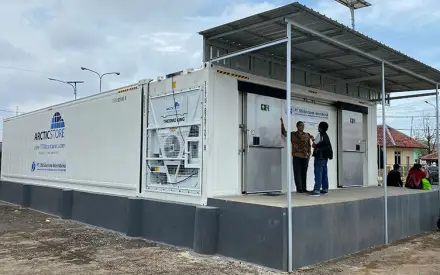
Note: this guide focuses on stationary refrigerated container delivery and setup only. A permanent cold room has a different setup process, while a large modular installation such as an Arctic SuperStore needs a project-specific plan and may need a week or more to install.
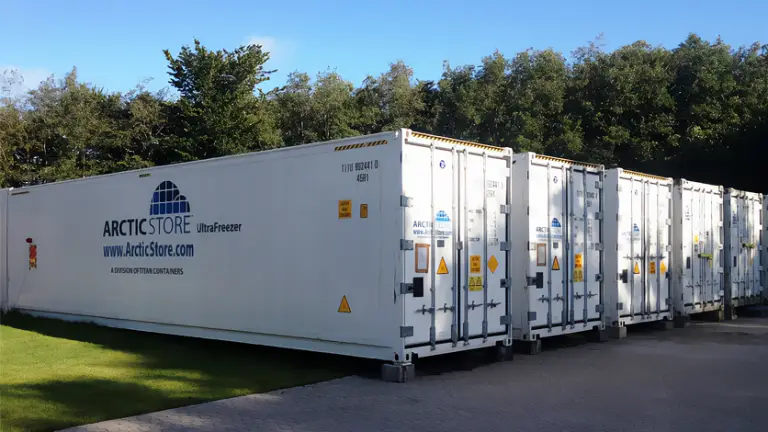
You’re renting a container to support a specific business process – so you need to be able to use it. Always place the container where stock can move safely and efficiently between it and your operation.
Consider the route in bad weather, the busiest shift and the space around the unit you’ll need when working on a full load. Make a site drawing, showing the direction your container door will open. Can you open it safely?
Add details about ramps, staff routes, handling equipment and any clearances you need. If there’s space around the container, don’t treat it as spare storage space.
Also check whether the location blocks an exit, vehicle route, drain or service access. A container can fit within a marked rectangle and still be in the wrong place.
The installation needs suitable support for the container and its planned load. Have the proposed surface and support arrangement assessed for your site. A fully loaded 40ft cold storage container weighs thousands of lbs.
Tell the delivery team about slopes – no matter how small – and any soft areas, recent groundwork or underground services. Photograph the position and the route after rain if water accumulation is an issue.
Agree on any required preparation before booking your delivery vehicle. Don’t improvise supports during delivery or assume a surface suitable for an empty unit will suit the loaded installation.
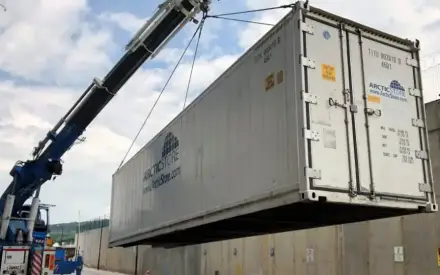
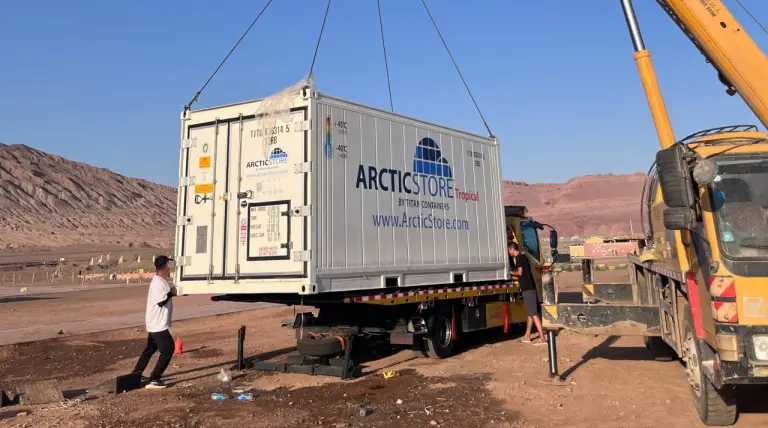
Our container delivery guide is a good starting point when planning your cold storage setup. The delivery truck and maneuvering the unit into position need more space than the container itself.
Tell your delivery team about the entrance width, relevant height limits, turns, slopes and overhead obstacles. Are there any restrictions on delivery times? Is there a bad time to deliver – such as the exact moment the yard is full of activity?
The TITAN installation team’s other top tips for delivery day include:
Exact clearance and lifting requirements depend on the delivery vehicle. Provide precise dimensions, rather than using generic clearance information taken from a similar site or a different part of your yard.
Want to work with an expert team who’ll help you plan a seamless delivery? Share your site details with TITAN.
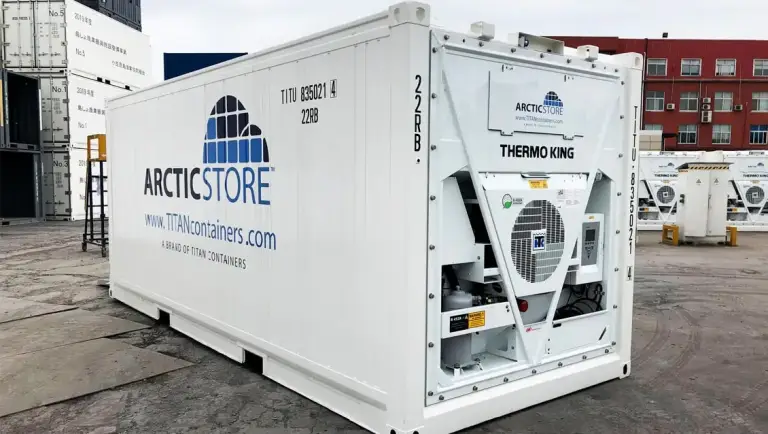
Ask for the electrical specification of the model you’ve ordered. A qualified electrician should check voltage, phase, frequency, circuit protection, connection and cable route against that information. Don’t assume a standard outlet will work for a refrigerated container. Equally, a plug from a container that appears to fit an available socket doesn’t necessarily mean the supply is correct.
Complete the agreed electrical work before commissioning and protect the connection and cable route from vehicles, water and other site hazards. Follow the supplier’s instructions for connecting, isolating and restarting the equipment.
If backup power – from battery storage or a generator, for example – forms part of your plan, design and test it as a separate job. It needs to suit the unit it will run as well as how power would be switched over when needed.
Most of the time, walk-in cooler installation is straightforward, but local restrictions occasionally apply.
Check local requirements covering both location and use, including any relevant zoning, building, electrical or fire provisions. Some people assume that a temporary rental is automatically exempt, but that’s not always the case, and cities/counties have their own rules.
Refrigerated container delivery and setup happens in stages, so assign an owner to each part of the job. The clearest installation plans state who prepares the ground, arranges power, clears the route, receives the unit and signs off at the end so it’s ready to receive stock.
| Stage | What should be settled |
|---|---|
| Before booking | Model, position, duration, site needs and access plan |
| Before arrival | Ground preparation, power readiness, approvals and clear route |
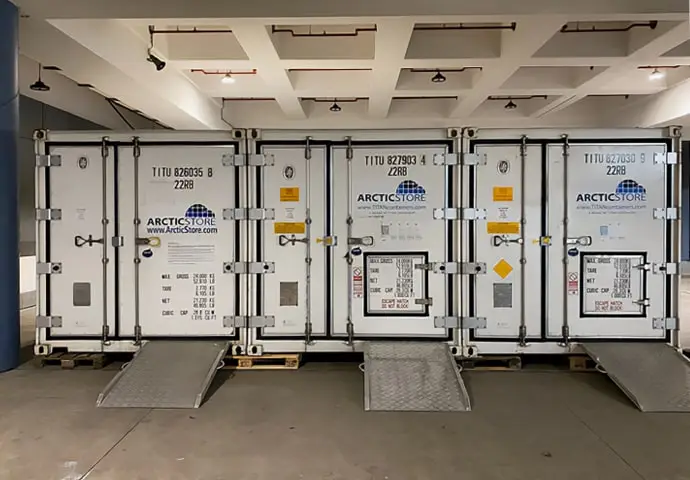
| At placement | Agreed position, door orientation, clearance and access |
| At handover | Controls, safety features, monitoring, checks and service contacts |
| Before loading | Required conditions reached and the site’s acceptance checks complete |
Don’t send the wrong people out when your supplier is setting up the container – make sure the people who will use the unit are there. They need to understand the controls and what to do when something goes wrong.
At handover, make sure you’re informed about setpoints, alarms, door operation, internal release, loading limits, cleaning instructions, emergency procedures and reporting route. Record the unit ID and keep the instructions available to each shift.
If you’re a TITAN customer, set up SmartArctic remote monitoring. It lets designated team members monitor and control the unit from anywhere 24/7. Create a plan for who acts on this information, including outside normal shifts.
Bring the empty space to your required operating conditions and carry out any relevant checks – these will depend on the goods and your industry’s or facility’s quality requirements.
A single cold reading may not be enough to sign off the space. For sensitive stock, ask your quality team what evidence they need to approve it for use.
When you load, follow a predetermined stacking layout and keep the air routes and exits clear. Then keep a close eye on the first day of normal use, because some problems only show up once staff are moving around and real stock is coming in.
Some cold storage containers are rented for many years – ample time for something new, such as a fence, to appear at your yard that makes removal at the end of the contract difficult.
Have a plan that keeps delivery/extraction routes permanently clear and agree on stock removal, cleaning and collection responsibilities toward the end of your rental contract.
If you want to reposition the unit during the rental, ask your supplier to do it. You’ll likely have to pay for any damage you cause by moving it around the yard yourself.
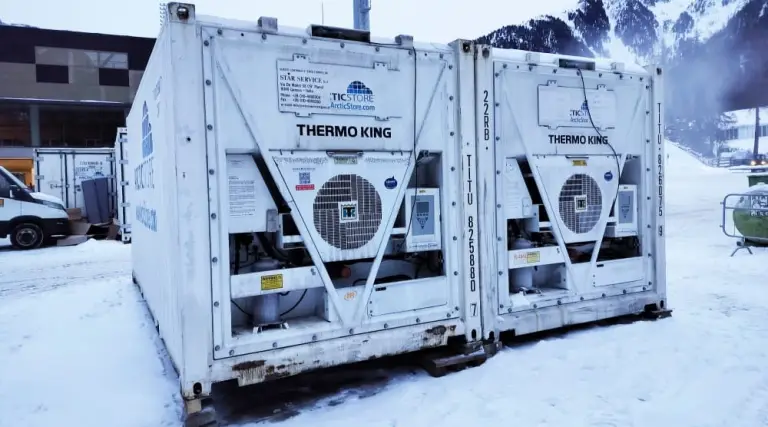
Share the final plan with the supplier and their drivers, as well as your site reception, facilities lead and person accepting the unit. Avoid last-minute requests to turn or move the container, as they can affect the cable route, ramp position and operating clearances.
Consider everyone who uses the yard, paying close attention to timed deliveries or a route shared with production vehicles. Stop conflicting movements while the delivery team follows the agreed placement procedure.
At the designated delivery time, have a fallback contact available if the main site representative is delayed, and after placement, walk the route staff and goods will use; you may spot issues you can still fix. Check that the planned handover can proceed and record any remaining actions.
If power or another essential item is incomplete and will delay use, revise your stock arrival plan. Day one is a functioning, accepted cold store with a trained team, not an unplugged container standing in the yard.
With more than 40 yards across the US and Canada and a large stock of 10ft, 20ft and 40ft reefer containers, TITAN is trusted by brands from Sonoco to Coca-Cola and Tesco for their cold storage needs.
For more information about what we offer, explore our refrigerated container range, then request a quote. Share some details about your site conditions and what you’re cooling, and we’ll come back to you promptly with pricing, delivery and setup information.
No. Load only after placement, connection, commissioning and your acceptance checks are complete, and the required conditions have been established.
It depends on the requirements for the actual vehicle being used and its placement method. Container dimensions alone do not show the space needed for delivery, so if your yard is tight, discuss this early.
Agree on responsibilities before arrival. Have a qualified electrician assess and prepare the site supply for the specific unit.
Usually, but arrange any move with your supplier. Before relocating, reassess the new ground, access, power and operating layout – and plan how you’ll handle stored goods before the move. Even moving a container just a few yards away can create new installation requirements.
It varies by walk-in freezer installation. Build your timetable around the unit, commissioning, product acceptance checks and stock. Agree on everything before taking delivery of stock, and have suitable alternative storage available just in case.

Josefine Falch is Global Marketing Manager at TITAN Containers, responsible for driving global marketing strategy, brand positioning, and lead generation across key industries and markets. With a strong focus on data-driven marketing, international campaigns, and cross-market alignment, she works closely with local teams to support commercial growth and strengthen TITAN’s presence worldwide.