Cold Storage Food Safety Guide
Safe food cold storage depends on the whole routine: receiving, temperature control, clean handling, stock checks and a clear response when something goes wrong.
Safe food cold storage depends on the whole routine: receiving, temperature control, clean handling, stock checks and a clear response when something goes wrong.
A cold room, such as a refrigerated or freezer container, can be working perfectly while the food around it is handled badly. If a delivery waits too long at receiving, raw products leak onto ready-to-eat food or an alarm goes off and nobody answers it – that’s a problem.
Build your routine so that everything runs safely and smoothly. Give each shift a clear way to accept stock, put it away, check it and release it for use.
Start with your product specifications and the food safety rules for your operation. This guide is about practical storage routines – the required limits and records have to come from the process you actually run.
Before you accept a delivery, check what your receiving procedure says to check. That can include product identity, packaging condition, date or lot details – and evidence that it’s been handled at suitable temperatures.
Have a suitable storage place ready before you unload. Don’t let a routine delivery wait while someone hunts for space in a cold room.
If a load doesn’t meet your acceptance conditions, identify it and follow your hold or rejection procedure. Putting it in a cold room doesn’t wipe out what happened to it earlier in the cold chain.
The FDA Food Code generally uses +41°F or below for cold holding of food that needs time and temperature control for safety. The code is the FDA’s recommended set of rules, not a law in itself. States and local authorities decide whether to adopt it, so check which version and requirements apply where you are.
For frozen food, 0°F is a common storage reference. Your product quality specifications may call for something different. Freezing doesn’t destroy all microorganisms.
Set the unit to a temperature that keeps your product within the conditions it needs – that’s your setpoint. But the room display only shows the air temperature at one sensor. It can look fine while the middle of a pallet is still warm, so it doesn’t prove that every item has reached temperature.
Food that arrives cold can go straight into storage. Warm food that has to cool quickly needs its own cooling process and the right equipment – such as a blast chiller or freezer.
A cold room is there to hold food at temperature. Put a large warm batch in and it has to take on all that heat at once, which can warm the goods already inside. A low setting on the controller doesn’t prove a batch has cooled safely.
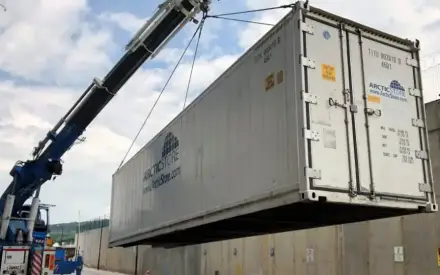
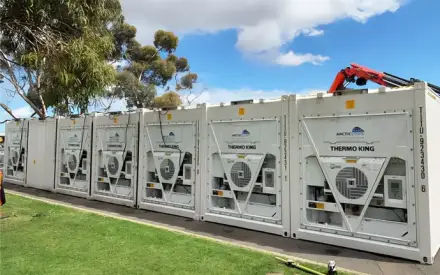
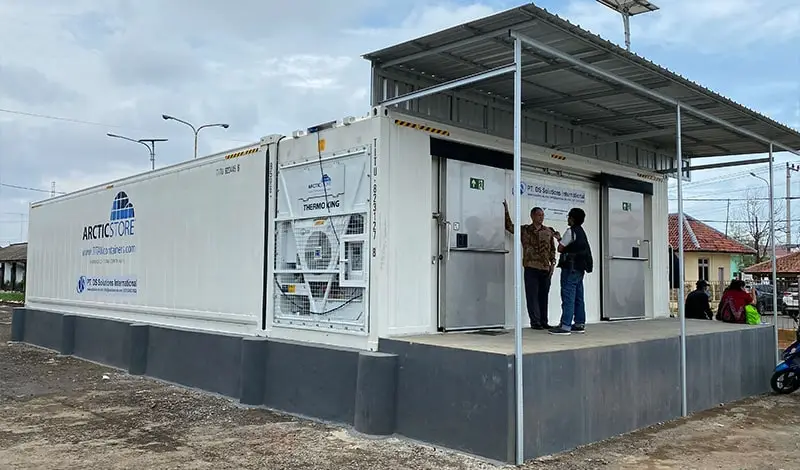
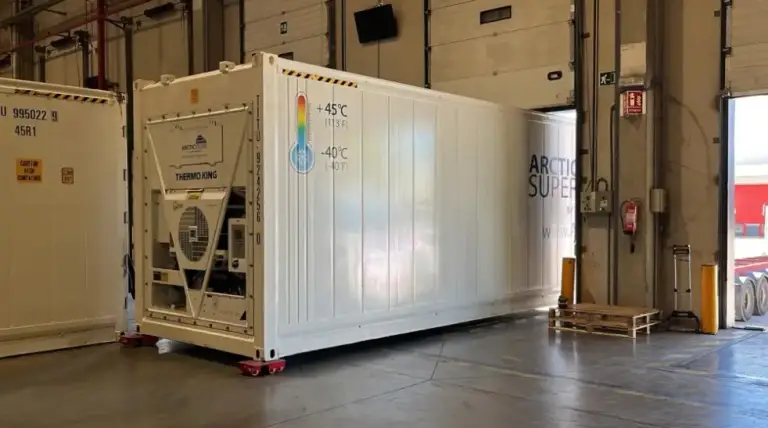
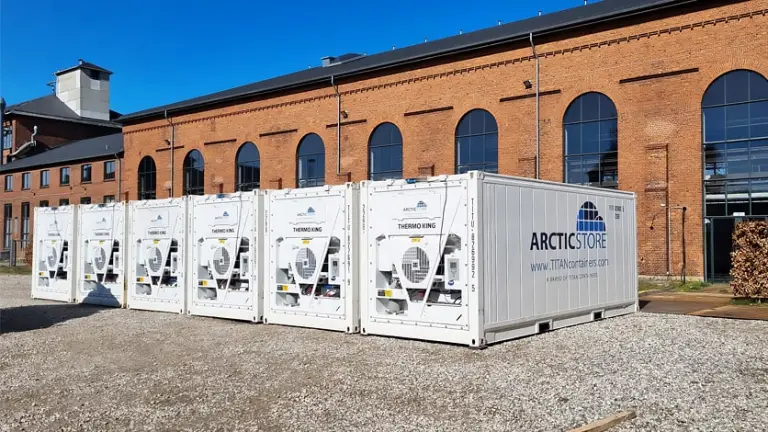
Our ArcticStore containers provide chilled and frozen storage. For rapid chilling or freezing duties, ArcticBlast is designed around batch processing. Consider your product, mass, packaging and required time before selecting the storage space you need.
Talk to our team about your food storage obligations so your rental units support your temperature, capacity and handling requirements.

Keep raw products away from ready-to-eat food. Use suitable separation and packaging, and follow your food safety plan on allergens and on which products can be stored together.
Make stock rotation easy to see. Labels should tell staff what the product is, which lot it’s from and the relevant use or expiration date, without anyone having to unpack it. Where shelf life is the deciding factor, organize picking so the right stock goes out first.
Leave room for inspection and cleaning. Keep the air routes clear and follow the unit’s loading limits. A packed cold storage room with no way in makes checks harder and makes it more difficult to get stock out safely.
A recommended routine for cold chain food safety looks like this:
| Step | What to do |
|---|---|
| Receiving | Accept stock against the product and condition checks you’ve defined |
| Placement | Use the correct zone and prevent cross-contamination |
| Holding | Monitor conditions and keep the approved loading layout |
| Picking | Keep stock identifiable and limit unnecessary time outside storage |
| Cleaning | Use approved methods and protect goods from contamination |
| Dispatch | Check release status and how the next stage will handle the goods |
Put the monitoring and review routine in your food safety plan: who checks the readings, what triggers action and who covers outside normal hours.
SmartArctic remote monitoring helps you review container performance. It’s included with most ArcticStore rentals and should be used alongside any product checks, equipment verification and records your operation requires.
Every alarm needs someone at the other end. A message sent to a phone nobody checks doesn’t protect the stock, so test that the right people can see the information and know what to do next.
If a limit is missed, follow these steps (adding any of your own, as needed):
Work to an agreed cleaning schedule and use approved products. Clear up spills and damaged packaging promptly. Check the doors and seals, and report ice, leaks or unusual performance through the service route.
Before a deep clean or planned work, find suitable storage for the goods you’ll have to move out. Let the unit return to the required conditions and complete the relevant checks before you restock.
It’s good practice to review the routine whenever the product mix, packaging, stock volume or shift pattern changes. What works for one workload may need adjusting for another.
When goods go on hold, make their status clear in both the stock records and the physical layout. Staff should be able to see which lot is affected and who can authorize the next step. Moving a held pallet to another cold room must not make it look available for use again.
Hand over the reason for the hold, the evidence still needed – and who’s handling the decision. Keep the related receiving records, temperature history and corrective actions together, so the next shift can carry on with the assessment without guessing what the last team already checked.
The same goes for dispatch. Confirm that released stock goes to the right next stage with its identity intact. Our cold chain guide looks at the handovers beyond the cold room. Within storage, the aim is a traceable path from receiving to release, supported by the checks your products require.
Tell us what you store, how it arrives, the required temperature and your peak stock levels. Then request a cold storage quote, and we can help match the equipment to the way your team works.
Food storage temperature guidelines vary by product and local rules – we’ll share what we know, based on around two decades of cold storage experience across 40+ yards in North America.
No. Freezing doesn’t fix an unsafe handling history, and it doesn’t destroy all microorganisms. Use your product and food safety procedures to assess the goods.
Not on its own. Use it as one part of your monitoring. Your process may also need product measurements, independent records and checks on your measuring equipment.
HACCP cold storage means keeping food cold as part of a HACCP plan – a system for finding what could make food unsafe and controlling each risk. In a HACCP plan, a cold room can be a critical control point, with set temperature limits, regular monitoring and records.
Identify and hold the affected goods, keep the records and follow your corrective action procedure. Then have the authorized person decide what happens to them.
Only if your layout and handling stop contamination and meet the food safety requirements that apply to you. Keep raw products contained and separate from ready-to-eat goods, including during loading and picking. Being able to hold the same temperature doesn’t make products suitable to store together – hygiene and allergen controls matter too.

Josefine Falch is Global Marketing Manager at TITAN Containers, responsible for driving global marketing strategy, brand positioning, and lead generation across key industries and markets. With a strong focus on data-driven marketing, international campaigns, and cross-market alignment, she works closely with local teams to support commercial growth and strengthen TITAN’s presence worldwide.