
Cold storage temperature ranges explained
Choose cold storage temperatures around your products, then match the equipment, loading plan, and monitoring to keep them within range.
Choose cold storage temperatures around your products, then match the equipment, loading plan, and monitoring to keep them within range.
A freezer that can reach a very low temperature is only useful if that temperature suits what you’re storing. Fresh food, frozen stock and lab materials all need different conditions – and even products in the same category can have different limits.
Look at the product label or specification and note down three things: the permitted temperature range, how long the goods will be in storage and whether they arrive cold. That last one matters, because holding frozen goods is a different job from freezing a warm batch.
Your cold room’s temperature settings should then follow that plan. Leave some margin for the normal ups and downs of loading and defrost, so the product stays within its limits.
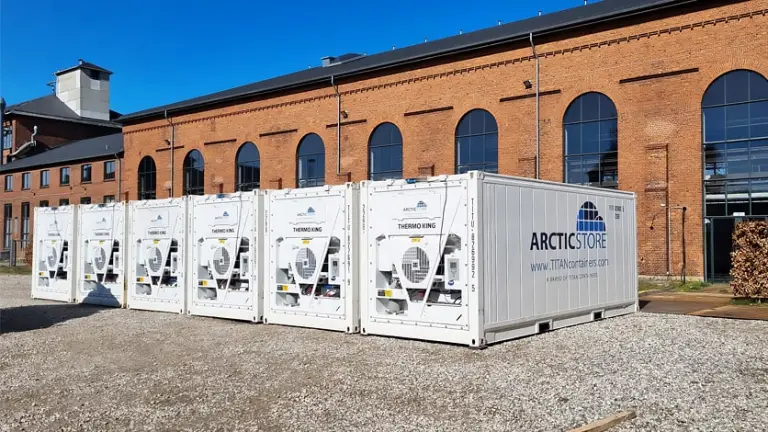
If you’re renting a refrigerated container for the first time, speak to a TITAN cold storage expert. We’ll help you understand your options and suggest whatever will work best.
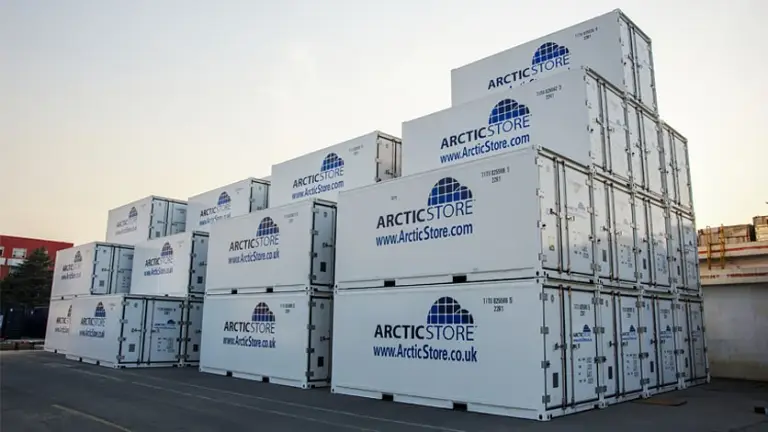
Here’s how the main categories compare. Treat it as a starting point for choosing equipment, and let your own product and rules have the final say.
| Storage need | Temperature reference | What to check |
|---|---|---|
| Chilled food | The FDA Food Code generally uses +5°C or below for cold holding of food that needs time and temperature control for safety | The rule adopted locally, product instructions, and any product-specific exception |
| Frozen food | 0°F is a common storage reference for frozen food | The temperature your product needs and its quality specification |
| Refrigerated vaccines | Many require +2°C to +8°C | The current instructions for the exact vaccine – some need frozen or ultra-low storage |
| Ultra-low storage | Depends on the product, and well below standard freezer conditions | The full allowed range, how you’ll monitor it and how the goods will be handled |
The Food Code becomes law only when your state or local authority adopts it, so local rules matter. For vaccines, follow the manufacturer’s current storage instructions and the CDC’s storage and handling recommendations.
They’re easy to mix up, and which one you’re looking at changes what the number tells you.
This is the target you enter on the controller. It tells the system what to work toward, but it doesn’t mean every carton has reached the same temperature.
Air cools and warms faster than a dense load. A sensor near an outlet can read differently from one close to the door, and opening the door can push the air reading up before the center of the product has changed much.
This is what your storage plan is there to protect. A pallet of warm goods can still be warm inside while the display shows the target temperature. Assess the load using the measurement method your product and quality procedures require.
Keeping the three apart makes it easier to find the cause when something’s wrong. It also stops you releasing stock just because the room display looks fine.
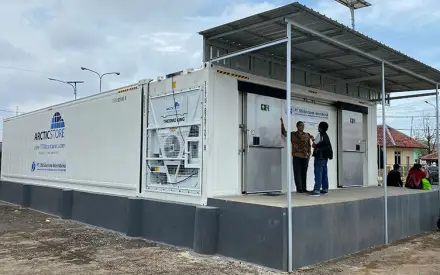
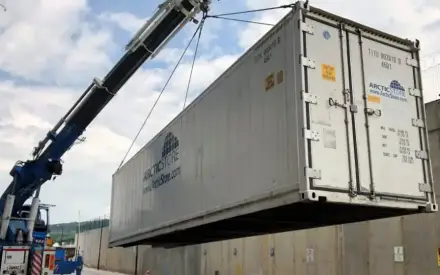
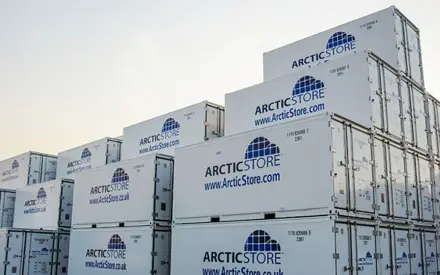
Our ArcticStore containers operate from -40°C to +45°C in 10ft, 20ft, and 40ft sizes. That range covers many chilled and frozen storage tasks.
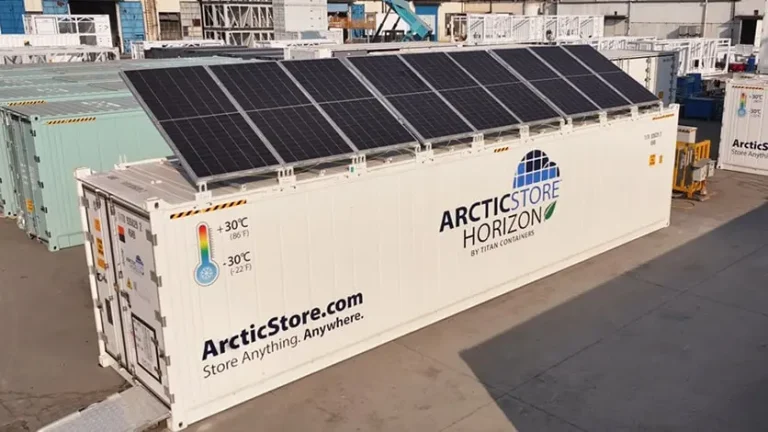
For a lower setpoint, TITAN’s Arctic UltraFreezer operates from -75°C to -10°C. It comes in 20ft and 40ft sizes. TITAN also offers an energy-efficient 40ft option called ArcticStore Horizon, which operates from -30°C to +86°C.
Those are the equipment’s operating ranges. They don’t mean every product can be stored safely at any temperature within them – decide what your product needs first, then pick the container.
For example, if your process needs -40°C, Horizon’s -5°C lower limit won’t get you there. And if your load only needs chilled holding, an ultra-low unit gives you capability you may not need.
Talk to us about your required storage temperature.
Plan the load before the first pallet arrives. Keep the air outlets and return paths clear, follow the unit’s loading limits and leave space for staff to reach and inspect the stock. Don’t pack cartons hard against a surface just because there’s a gap to fill.
Group products that suit each other. If two products need different conditions, give them separate controlled spaces – a temperature halfway between the two can put both at risk.
Treat the door with care too. Stage the load before you open the container, clear the route and close the door once the transfer is done. That works better than leaving it open while someone goes looking for the next pallet.
“Pull-down” means bringing a load down to its target temperature. How long that takes depends on the product, its starting temperature, the packaging, the size of the load, the airflow – and how much cooling the unit itself can deliver.
If you need rapid chilling or freezing, say so up front as a requirement for the job. ArcticBlast is designed for rapid chilling, freezing and tempering, and a container built for holding shouldn’t be expected to match its batch performance.
Don’t turn the controller well below the normal target to make up for an overloaded room. You could freeze sensitive stock near the air outlet while the middle of another pallet is still too warm.
Before you load anything, agree the normal operating range, the alarm limits and what you’ll do when one is reached. Name someone to receive the alerts, and someone to cover when they’re away.
SmartArctic remote monitoring helps you review container performance and make setpoint changes remotely. Use it alongside the product checks and records your operation requires.
When a reading goes out of range, record the time, the stock affected and what you did about it. Keep the affected goods separate until your quality lead has assessed them. Getting the air back to its setpoint doesn’t tell you whether the goods are fit for use.
Before you set the controller, walk through a normal delivery with your quality and operations teams. A chilled ingredient that arrives within its specified range needs somewhere it can be put away promptly. A freshly prepared batch that still needs cooling is a different case, and it needs a separate decision about the process. If you record both as “chilled storage”, you hide a difference that affects which equipment you choose.
Then write a simple temperature brief with four entries:
Add who’s responsible for changing settings and who reviews alarms, and keep the brief with the operating instructions so the next shift works to the same requirements.
Review the brief whenever the product, packaging or loading pattern changes. The setpoint may still be right even when the way goods reach and hold that temperature needs adjusting.
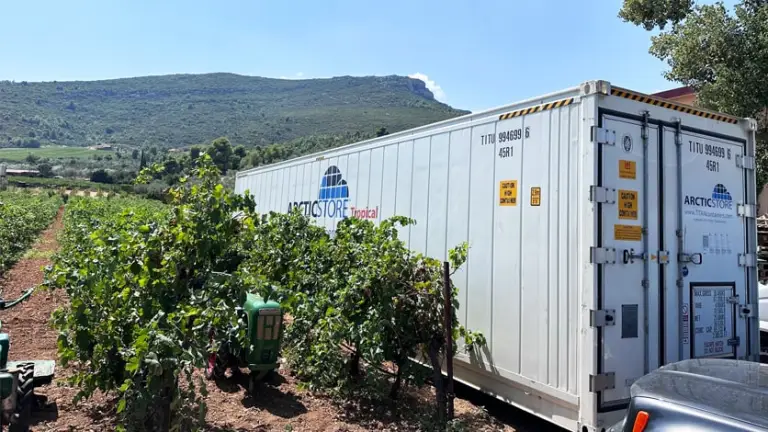
Tell us what you store, the permitted temperature range, arrival temperature, maximum load and delivery location. Include any batch cooling or monitoring needs, and we’ll match your cold storage requirement to a unit that does the job.

Josefine Falch is Global Marketing Manager at TITAN Containers, responsible for driving global marketing strategy, brand positioning, and lead generation across key industries and markets. With a strong focus on data-driven marketing, international campaigns, and cross-market alignment, she works closely with local teams to support commercial growth and strengthen TITAN’s presence worldwide.