Cold storage warehouse vs container: which should you choose?
Choose between warehouse cold storage and an onsite container by looking at stock movements, handling needs, available space, and how often plans change.
Choose between warehouse cold storage and an onsite container by looking at stock movements, handling needs, available space, and how often plans change.
There are three ways to add cold storage: pay a third-party cold storage warehouse to hold your stock, build a cold room of your own or put a refrigerated container on your site. All three keep products cold.
What changes is where your stock sits, who handles it and who takes on the costs and responsibilities.
So begin with the stock itself. If your team needs ingredients beside the production line every morning, distance matters, and that points to keeping it close. If your finished goods leave in full pallet loads, an external facility may suit you better.
TITAN has a range of cold storage containers to rent that can be positioned onsite exactly where they are needed. We also offer modular options and can quickly create custom cold spaces of any shape or size. The largest are our two-story Arctic MegaStores, which offer high capacity in a relatively small footprint.
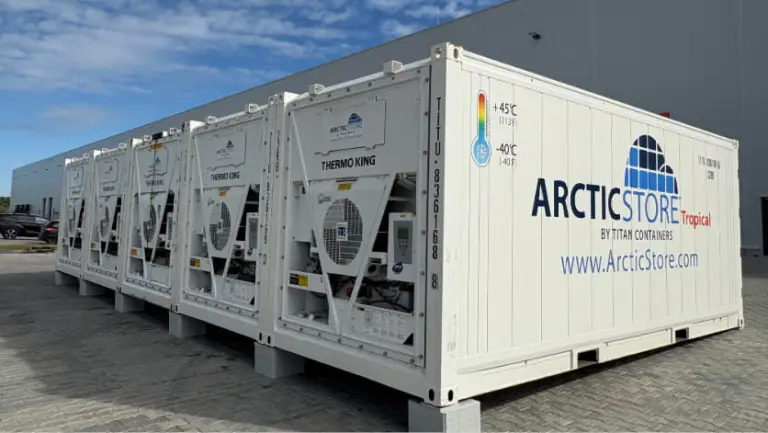
A cold storage warehouse is a building that holds chilled or frozen goods at controlled temperatures. It might be run by an outside provider, who stores your stock under a contract and may also handle receiving, picking and dispatch. Or it might be your own – a cold room or warehouse that you build and run on your own site.
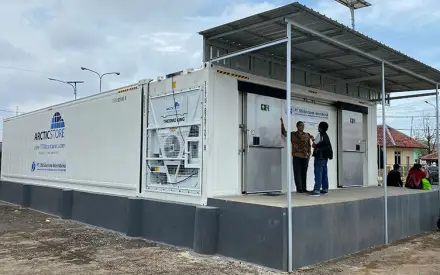
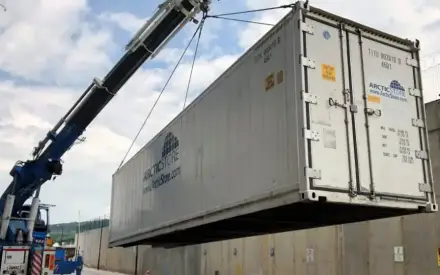
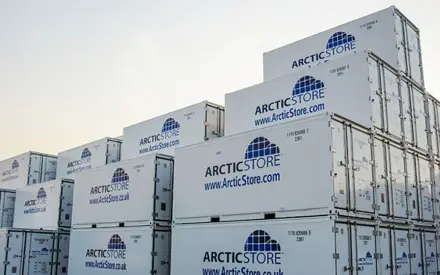
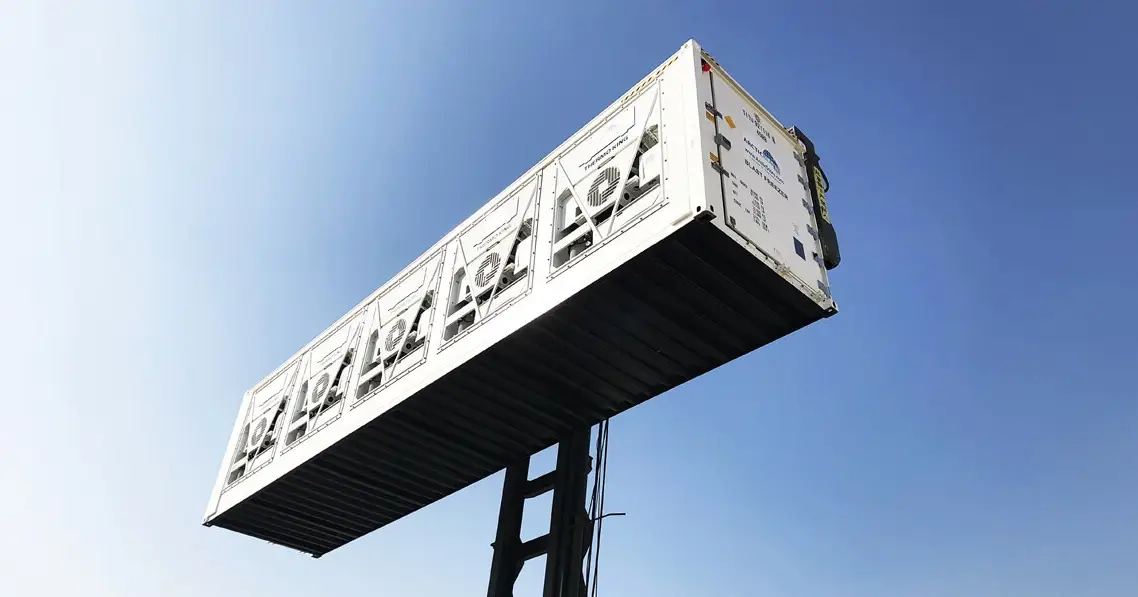
A cold storage container is a refrigerated container delivered to your site, so your chilled or frozen stock is close to where you use it. You run it day to day, including loading, cleaning and monitoring, and if renting, you can return it when it’s no longer needed. Our ArcticStore containers are one example, and come in 10ft, 20ft and 40ft sizes.
| Third-party cold warehouse | Your own built cold room | Onsite refrigerated container | |
|---|---|---|---|
| Stock location | At the provider’s facility | Within your premises | At an agreed position on your site |
| Handling | The provider, under contract | Your team and equipment | Your team and equipment |
| Access | Consider opening times and service arrangements | Unrestricted | Unrestricted |
| Capacity changes | Depends on the space you’ve contracted and what’s available | Will need construction work and time | Add or change units as needed |
| Setting up | Arranging logistics and integrating services | Design, construction and commissioning | Delivery, site preparation, power and commissioning |
| Main cost drivers | Storage, handling, transport and services | Capital cost, running costs and upkeep | Rental or purchase, transport, setup and power |
No option wins every time when considering permanent vs temporary cold storage. Use the table to find the arrangement that suits how your stock moves.
Considering the onsite option? Talk to our team about the stock you need close to your operation.
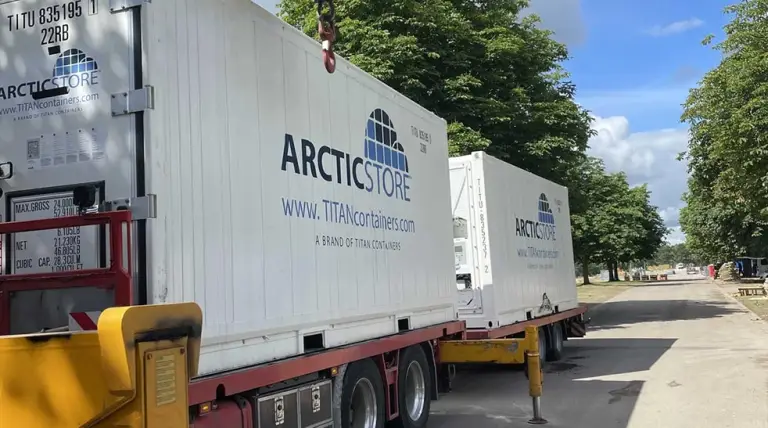
An external facility can suit stock that doesn’t need to come back to your production area. It can also help if your site has no room for more cold storage, or if the power supply isn’t suitable for additional portable units.
Ask what services the warehouse actually provides. Receiving, picking, packing, stock records and dispatch may all be on offer, but each one needs to be written into the agreement. Storing a pallet and managing its daily orders are two different services.
Before you compare prices, map out a normal week of movements. Count the incoming loads, the outgoing orders, the partial-pallet picks and the urgent requests. Check the handling fees and lead times that go with each.
A low price per pallet can be good value for slow-moving stock. The same rate looks much less attractive, however, when your team needs small amounts several times a day.
A built cold room can become part of a long-term production layout. It may suit a stable site with predictable demand and a clear plan for staff, machinery and how products move.
Design it around that workflow. Where the doors go, how people get in to clean, what temperature zones you need and how much room you’ll want later all affect how well it performs.
Allow for design, approvals, construction, power and commissioning – and decide how you’ll store products while the work goes on. The true cost of a permanent cold room includes the disruption around the build as well as the finished space. Maintenance is a factor, too.
If your commercial lease is short or you might move, think about what happens to that investment. A room built into a facility can’t be picked up and repositioned the way a portable refrigerated container can.
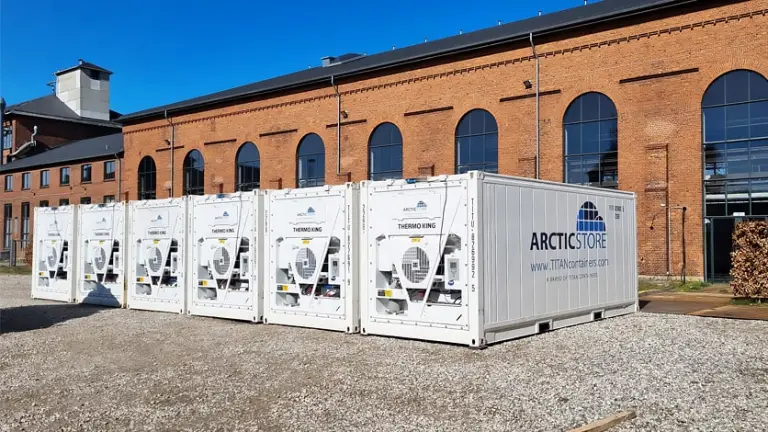
A refrigerated container puts chilled or frozen space close to where you use it. It suits overflow, site work, seasonal demand and longer-term storage when you want a layout you can change later.
You keep direct control of loading and stock access. You also keep responsibility for safe handling, cleaning routines, monitoring and your site’s power arrangements.
For example, a food producer might keep frozen stock that’s ready for packing in an external warehouse, and use a container for ingredients beside the plant. That saves moving every item offsite just because the main freezer is full.
Our ArcticStore units come in 10ft, 20ft and 40ft sizes. For a larger connected space, Arctic SuperStore combines modular units into an open-plan cold room.
Start by writing down the journey of one typical pallet under each option:
Then compare the time and fees over a realistic period:
External storage: include transport and handling.
Onsite storage: include power, staff time, site space, equipment and the cost of running the cold room.
Don’t compare a warehouse’s cost per pallet with a container’s cost per square foot. Use a shared measure instead, such as the total cost to store and handle your expected stock for three months.
And keep stock access in the calculation. A layout with no aisle to pick from may fit more pallets on paper, but every retrieval can take longer.
The container’s footprint is only part of the space you need. Allow room for the delivery, the doors, your staff, loading equipment and airflow around the refrigeration equipment.
Use our delivery guidance to prepare your site. When requesting a quote, send us a site plan and photographs, so we can assess where the unit will go and how it will get there. The power has to suit the specific unit, and the ground must support the installation you’re planning.
Don’t assume a temporary rental avoids local approvals. Check the rules for your site and the way you’ll use it before you commit.
Take a recent busy week and list four things:
That gives you a practical test for each option.
For an external warehouse, apply the proposed booking times, transport journeys and handling charges to those movements. For a built room or a container, check the staff time, the stock positions available and the route to the production area. Include one urgent request too: how would your team get hold of something they need sooner than planned?
Then do the same for a quieter week. Space you need at a peak can sit empty later. That’s a cost if you own or rent it, and less of one if you pay a warehouse only for the pallets you store. The comparison gets clearer once you can see which option works across both periods, not just on the busiest day.

You don’t have to keep all your stock in one kind of cold storage. Keep fast-moving goods close to the team that uses them, and store slower stock wherever the logistics and handling costs make most sense.
That gives each space a clear job, and it makes it easier to cope when demand changes – without redesigning the whole operation.
Tell us how often you receive, pick and dispatch goods, along with your temperature and capacity needs. Ask our team about onsite cold storage, and we can help you assess how containers fit into your plans.
No. Compare the full storage and handling cost for your workload. How often you move stock, staff time, energy and the services you need can all change the result.
A single unit may suit a smaller requirement. Modular cold storage can create a larger connected space, but you need to plan the layout around capacity, access and temperature. When weighing up a built cold room vs container, size, cost, disruption and permits are key considerations.
Yes. A useful approach is to keep daily-use stock onsite and bulk reserve stock at an external facility, with clear procedures for transfers and monitoring.
It depends on your agreement. It should cover responsibilities including receiving checks, temperature records, stock identification, access and action after a deviation. Your business still needs to understand how the service meets your product requirements. A clear handover stops each side assuming the other has done an essential check.
Yes. A suitable container can give you temporary holding space while the work is carried out. Before the existing room closes, plan the transfer, the peak capacity you need, the power, the monitoring and the route between the two spaces. Allow time to commission the temporary unit and confirm it’s ready before you move any stock.

Josefine Falch is Global Marketing Manager at TITAN Containers, responsible for driving global marketing strategy, brand positioning, and lead generation across key industries and markets. With a strong focus on data-driven marketing, international campaigns, and cross-market alignment, she works closely with local teams to support commercial growth and strengthen TITAN’s presence worldwide.