Compare reefer container sizes by how much you can actually store and whether they fit your site. External length is only a starting point – it doesn’t tell you how much you can use. Our guide covers dimensions, volume and planning strategies to help you make the right choice.
A container’s length tells you how big the box is, not how much you can store in it. That depends on your stock layout, your packaging and how people need to reach the goods.
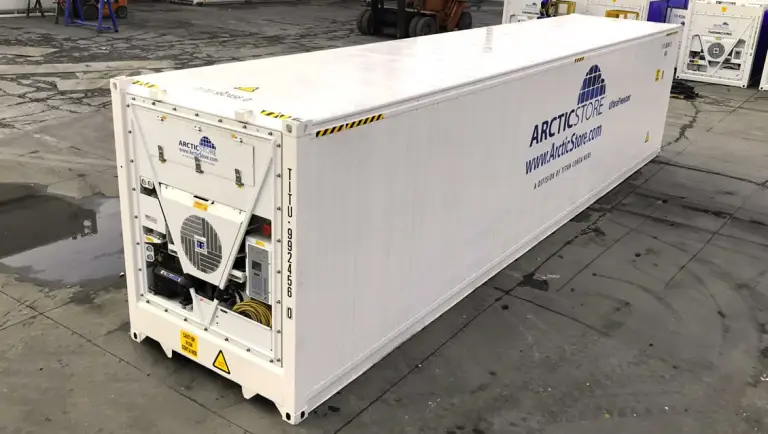
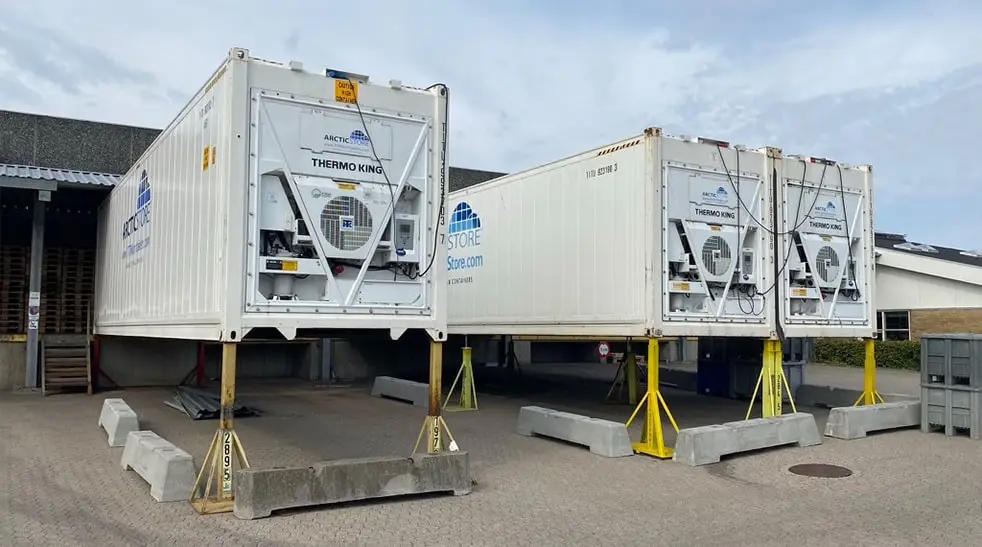
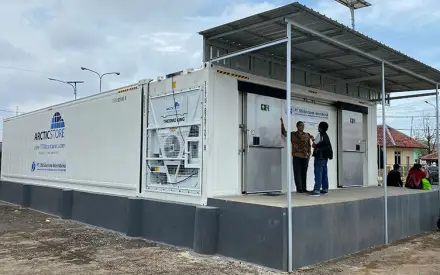
For stationary onsite storage, our signature cold storage model, ArcticStore, comes in 10ft, 20ft and 40ft sizes. The insulation and refrigeration equipment take up room, so the inside of each one is shorter than a dry shipping container of the same length.
Comparing the main ArcticStore sizes
Size
When to consider it
The main question to ask
10ft
A smaller stock requirement or a site with limited room
Will the usable layout hold your peak load, with room for access and airflow?
20ft
Extra capacity for a production area, store or project
Does the loading pattern still work at your busiest intake?
40ft
Larger stock volumes, or a longer working space
Can staff reach goods efficiently along the full length?
These show how people tend to use each size. They aren’t fixed pallet capacities, and a size that suits bulk holding may not suit a team picking individual cartons all day.
These are TITAN’s published figures for the ArcticStore, given as length × width × height in decimal feet so that you can compare a 10ft vs 20ft vs 40ft reefer container. Small variations between units can occur.
Size
External dimensions
Internal dimensions
10ft
10ft × 8ft × 8.5ft
7.6ft × 7.5ft × 7.6ft
20ft
20ft × 8ft × 8.6ft
17.6ft × 7.5ft × 7.6ft
40ft
40ft × 8ft × 9.6ft
37.7ft × 7.5ft × 8.5ft
Use these figures for early planning, then confirm the specification and the clearances you’ll need around the unit before you decide on the final layout. The 40ft’s extra internal height may matter for your load, but stacking still has to account for your packaging, how you handle the stock, airflow and load limits.
Have a stock list and a site plan to hand? Ask us to help compare sizes based on how you load and retrieve goods.
What do the dimensions really tell you?
External measurements
The external measurements show whether the container fits the position you have in mind. Check the height as well as the length and width, especially near buildings or anything overhead.
The space you need is bigger than the steel box itself. Doors, ramps, people, handling equipment and the clearances around the refrigeration equipment (the machinery that does the chilling) all need room.
Internal measurements
Insulation, the floor and the cooling equipment all take up room, so the usable interior is smaller than the outside suggests. Don’t copy internal dimensions from a dry container or from another cold storage model: make sure you’re working from the one you plan to rent or buy.
Read the lengths carefully. A decimal value such as 7.5ft means seven and a half feet, not seven feet five inches. Pick one unit format and use it whenever you share dimensions with your team.
Door opening and loading limits
A load can fit inside the room yet fail to pass through the door. Check the opening against the full height of a loaded pallet, plus any overhang or handling attachment.
Also check the relevant floor and load limits for the unit and for the way you’ll handle the stock. Internal volume doesn’t tell you how much weight you can put in one area.
Our container dimensions reference lists every unit in the range, and you can switch on “Only cold storage” to leave out our shipping/storage containers. Before you finalize your layout, check the figures for the exact unit you’ll receive.
How much will actually fit in the unit?
List the pallet footprints or package dimensions you use. US and European pallets are different sizes, so a Euro-pallet count you’re quoted isn’t the same as the number of US pallets that will fit.
Draw the layout at peak stock. Keep the air routes clear, leave a way to reach the goods you need to pick and give stock that’s waiting for a decision dedicated space.
Don’t plan to fill every cubic foot. Airflow and handling are part of your working capacity, and what you want is a load arrangement you can repeat, not a theoretical maximum.
For example, a business holding sealed pallets until a single dispatch may use the space very differently from a caterer taking out small quantities all day. A catering business needs access that the bulk store may not.
Choosing between one larger unit or two smaller ones
One larger unit can keep compatible stock in a shared space, with fewer separate loading points. Two units can keep products, temperatures or jobs apart.
If you need chilled ingredients and frozen finished goods, two controlled spaces solve both a temperature and a capacity problem. One container can’t maintain two different temperatures at once.
If both units run from the same power supply, remember that a power outage will affect both – so plan your backup carefully.
One large unit works well when you:
Have compatible stock that can share a space and a single temperature
Want fewer loading points to manage
Need a longer working space, so staff can reach goods along the full length
Two smaller units may be better when you:
Need two temperatures, such as chilled ingredients and frozen finished goods
Want to keep product groups or jobs apart
Need to keep goods awaiting a decision separate from stock that’s ready
May want to reduce capacity if your needs change
For each option, compare the total footprint, the power arrangements, the rental cost and how staff will move around.
Do you need a different type of cold storage unit?
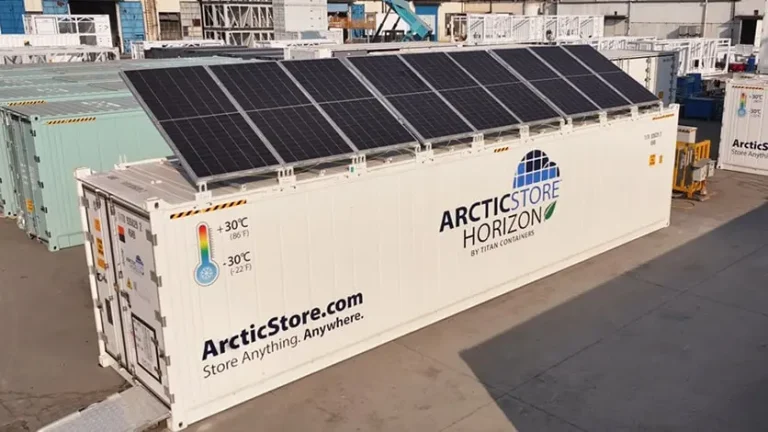
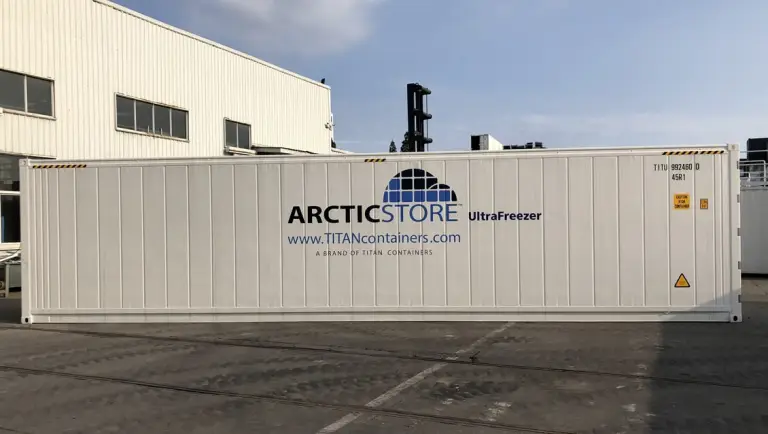
The ArcticStore size list does not apply to every product in the range. ArcticStore Horizon is a 40ft model with a -30°C to +30°C operating range. Arctic UltraFreezer comes in 20ft and 40ft sizes and offers temperatures from -75°C to -10°C. ArcticBlast – a powerful blast freezer – is also available in 20ft and 40ft only.
For an open-plan space beyond a single container, consider an Arctic SuperStore. It combines modular units into a connected cold room of any size. Its final dimensions depend on the design, so don’t think of it as one box with a fixed width.
Whatever you decide, choose the temperature and cooling first, and then the size. A bigger unit of the wrong type still won’t meet your brief.
Check the delivery route before ordering
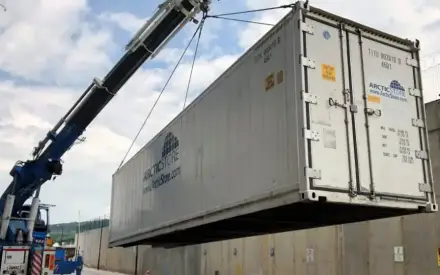
A container that fits the site you’ve set aside for it can still be hard to deliver. Check the delivery vehicle, the turns on the way in, any overhead clearance and how the container will be lifted into place.
Read our delivery guide and, if you’re unsure, send us a marked plan with photographs. Leave room for collection too, especially if building work will change the site during the rental.
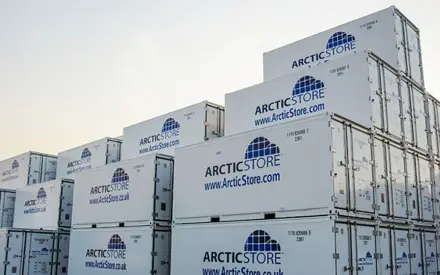
We have a large stock of cold storage units across the globe and we’ll steer you towards the right solution – whether that’s a collection of smaller units, a single large one or a custom-built modular arrangement.
FAQs about reefer dimensions
Is a 20ft reefer as spacious inside as a dry container?
No. Insulation and cooling equipment take up space, so the inside is smaller. Compare the dimensions of the specific refrigerated model – not one of TITAN’s shipping containers.
How many pallets fit in a refrigerated container?
It depends on the unit, the pallet size, how you load it, the airflow and how people need to get in. Work from a plan for the specific model, not a generic count.
Does TITAN offer every cold storage model in 10ft?
No. ArcticStore offers a 10ft option. Specialist products have their own size ranges, so check each one separately.
Does internal volume equal usable storage capacity?
No. Internal volume is the space inside the unit, but a working layout also needs room for airflow, for staff to get in and for how you’ll handle the stock. Package shape and stacking limits also affect available space. A volume figure tells you how much space there is, not how much you can use, so sketch your stock positions first.
What measurements should I send with my pallet count?
Send the loaded pallet’s length, width and height, any overhang and its weight. Add your handling equipment and whether staff need to reach individual cartons. A pallet count on its own can’t show whether a load will fit through the door, how it will work in the layout or which load checks apply.
Josefine Falch is Global Marketing Manager at TITAN Containers, responsible for driving global marketing strategy, brand positioning, and lead generation across key industries and markets. With a strong focus on data-driven marketing, international campaigns, and cross-market alignment, she works closely with local teams to support commercial growth and strengthen TITAN’s presence worldwide.