Refrigerated container power consumption explained
How much electricity a refrigerated container uses depends on the job. The temperature you need, the weather, how you load it, how well it’s insulated and how often the door opens all affect the energy you pay for.
Reefer container power requirements – the supply the unit needs – and the electricity it uses over a month are two different figures, and you need both before you set a budget.
Power, measured in kilowatts (kW), is the rate at which electricity is used. Energy, measured in kilowatt-hours (kWh), is the amount of electricity used over time. Your electricity bill usually charges for energy, plus possible demand charges and other fees.
The rating on a unit tells your electrician what the connection has to cope with. Don’t multiply it by every hour of the month and call the result your running cost, because refrigeration equipment doesn’t draw one constant load. It responds to changing conditions.
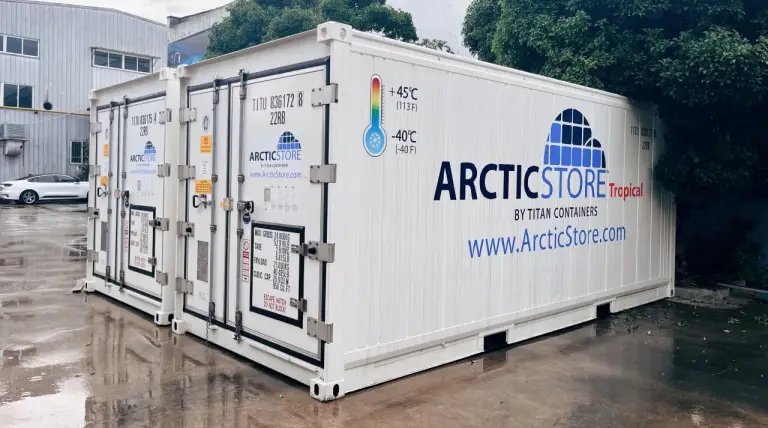
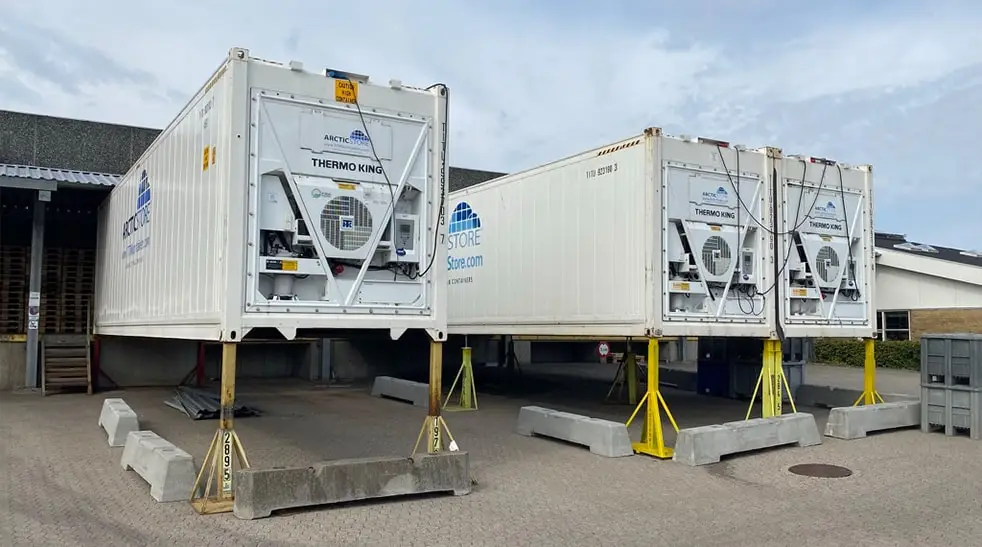
How much energy a unit draws also depends on how it’s built. Most TITAN clients choose the ArcticStore, which runs from -40°C to +45°C. But if keeping energy use down is your priority, our lower-energy option is the 40ft ArcticStore Horizon. It has better insulation and solar panels – though a slightly narrower temperature range: -30°C to +30°C.
What makes a cold store use more electricity?
The unit itself matters, because how well it’s built and insulated sets a baseline. On top of that, four things affect how much electricity it uses:
A bigger gap between the inside and outside temperature
Heat moves into a cold room from its surroundings, so holding a low temperature on a hot day gives the system more heat to remove. The same unit can use different amounts of energy across seasons or sites.
Work to what your product actually needs. Setting a unit colder than necessary can add cost, but raising the temperature without checking the product’s limits can damage stock. The aim is to meet your exact requirements as efficiently as possible.
Warm goods going in
Holding goods that are already chilled is a different job from cooling a warm load. The goods themselves add heat, and dense loads take time to cool right through.
If you need to cool a batch fast, tell your cold storage supplier how big it is, what temperature it starts at and how long you have. The right equipment matters more than making a holding room colder. A blast freezer, such as TITAN’s powerful ArcticBlast, is often the answer.
Doors left open
Every time a door opens, air comes in. The system has to deal with any moisture as well as the heat. Poor loading habits can keep the chilling equipment working harder through a whole shift.
Get goods ready before you open the door, keep the route clear and close the door promptly when the transfer’s done. Use the curtains and door features as intended.
Blocked airflow or a unit in poor condition
Blocked air paths, damaged seals and neglected equipment all hurt performance. Make daily checks part of your routine and report changes before they become lasting problems.
Leave technical repairs and refrigeration work to authorized specialists, because an improvised adjustment can hide what’s driving up energy use without fixing it.
Planning a rental? Tell us about the job and site so the models we suggest will reflect your real-life operating conditions.
How do you estimate your running cost?
Ask your supplier for a daily kWh estimate for a job like yours, along with the conditions it’s based on: the temperature, the goods, the weather and how often the doors open. Without those, you can’t tell whether the figure matches your situation.
Energy charge = daily kWh × days in use × electricity rate
If you’re on a business rate, check demand charges, time-of-use prices and fixed fees separately. The energy calculation is only one part of the bill.
What goes into the estimate
What to find out
Daily energy
Metered use from the unit, or a supplier’s estimate for a similar job
The job
The temperature you’re holding, the goods, the temperature they arrive at and how much comes in each day
Site conditions
The season, how exposed the unit is outdoors and your operating hours
Handling
How often the doors open and how you load
Tariff
Your business electricity contract
Make the period you measure match real use
Once the container is in use, record the energy it uses across normal working days and quiet periods. Include your busy loading days, not just the best results.
Keep a short note of the weather, how much stock came in and anything unusual. A rise in energy use after a big delivery may have a different cause from a rise on an empty weekend.
Compare like with like. A small chilled unit and a larger freezer may both report a daily kWh figure, but that doesn’t make for a fair comparison.
If several containers share one site meter, ask your facilities team how to measure each one separately. Guessing each unit’s share from the total bill can send you after the wrong fix.
How can you keep your reefer running costs down?
Start with the daily routine. Keep the air paths clear, keep door time down and arrange stock so staff can find goods quickly. Report damaged seals and unusual ice buildup through the agreed service route.
Then look at capacity. Space that’s never used may mean the unit is a poor fit, while a container packed beyond a workable layout causes handling and airflow problems.
Our ArcticStore range offers 10ft, 20ft and 40ft options. Selecting the right layout is part of managing cold storage running costs.
By how much can ArcticStore Horizon cut energy costs?
ArcticStore Horizon combines improved insulation with solar assistance. TITAN reports an average energy reduction of 55% compared with traditional reefers. This is a comparison claim, not a guaranteed saving on every site’s electricity bill.
Horizon is available in 40ft and operates from -30°C to +30°C. It still has to be connected to a suitable power supply – the solar panels don’t make it off-grid.
If you’re working on a project that will run for months or years, ask us to compare different container options based on your temperature, load and site conditions.
Energy use rises with the workload, so compare like with like
A daily kWh figure doesn’t tell you much on its own, because it depends on how much work the unit was doing. A week with twice as many pallets coming in will probably use more electricity, even if nothing has gone wrong. And a quiet week with fewer door openings can make the unit seem more efficient than it really is.
Keep a log of daily kWh, the temperature you’ve set, what came in and anything unusual. Then compare like with like:
For a stable holding operation, compare weeks with similar average stock and door use.
For batch cooling, record the weight and starting temperature of each load.
Use the measure that fits the job, not the same pallet count for every kind of operation.
When you try something new, change one thing at a time, or you won’t know what made the difference. If you improve how you stage goods at the door, for instance, compare energy use and how quickly the temperature recovers across shifts with a similar load and similar weather.
A short test can mislead, too: if the weather or the load changed at the same time, you can’t put the saving down to the change you made.
Make monitoring part of your energy review
SmartArctic is a remote monitoring platform fitted to most ArcticStores. It gives you remote visibility into how a container is performing, so you can read temperature trends alongside your energy and loading records and spot changes worth looking into.
If your energy use rises, check what changed first. More stock, a new shift pattern, hotter weather or a door fault each needs a different response.
Ask for cold storage recommendations that match your business setting. Once we know your target temperature, capacity, location and rental period, we can help you select a unit that fits the job.
FAQs about cold storage energy consumption
How much electricity does a reefer container use?
No single figure fits every job. Ask for an estimate that states the conditions it’s based on, then check your actual use over a period that includes busy and quiet days.
Is the electrical rating the running consumption?
No. The connection and demand ratings tell your electrician how big a supply the unit needs. Metered kWh shows how much energy a reefer container uses over time.
Can I save energy by changing the temperature?
Only if your product allows it. Work to the conditions your product requires, and don’t change the temperature to save money unless the new conditions are approved for the goods and the process.
Should I turn my reefer container electricity supply off overnight to save power?
No, not if there are temperature-sensitive goods inside. They need continuous control, so switching the unit off overnight isn’t a safe way to save money. If the unit is empty and you’re taking it out of use, follow the provider’s shutdown and restart instructions, and check it’s ready before you reload.
Why is the first day different from a normal operating day?
The first day or two will use more energy than a normal day, because the unit has to bring itself and the goods down to temperature. Leave those days out when you work out a typical month, but count them in your overall budget. If you use one start-up day as your daily figure, you’ll overestimate the cost of the whole rental.
Josefine Falch is Global Marketing Manager at TITAN Containers, responsible for driving global marketing strategy, brand positioning, and lead generation across key industries and markets. With a strong focus on data-driven marketing, international campaigns, and cross-market alignment, she works closely with local teams to support commercial growth and strengthen TITAN’s presence worldwide.