Refrigerated container rental cost guide
Refrigerated container rental cost includes more than the rental rate. Size, temperature, delivery, power, and your site all shape the total.
Refrigerated container rental cost includes more than the rental rate. Size, temperature, delivery, power, and your site all shape the total.
Two cold storage quotes for the same job can look very different, because they don’t always include the same things. One may include delivery, while another lists it separately. A low rental rate can also come with more work to get your site ready or a unit that costs more to run.
The most important question is what it will cost to keep your stock at the right temperature for the whole rental. Start with that figure, then compare your options.
There’s no single price for cold storage rental that covers every unit and site. A 10ft cooler for a small overflow load is a very different job from a modular freezer used through a year of production.
| What you’ll pay for | What changes the price | What you need to know |
|---|---|---|
| Container rental | The model, the size, the temperature you need and how long you rent it | The rate, how it’s billed and the minimum term |
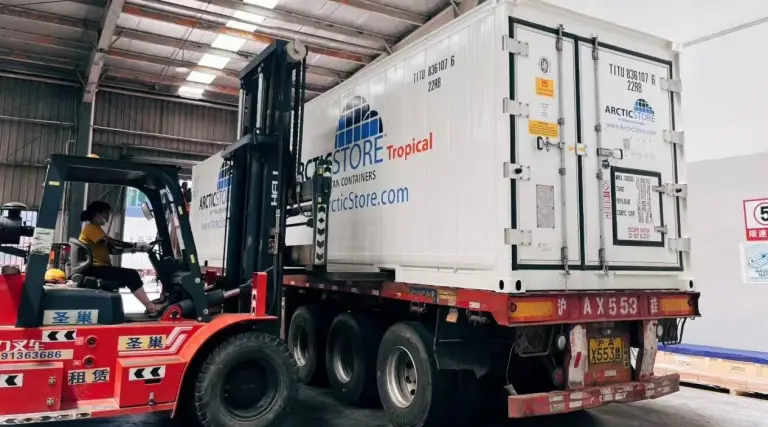
| Delivery and collection | Where you are, how the container is transported and how easy the site is to reach | Separate figures for delivery and for collection |
| Site preparation | The ground, where the unit will sit, the route in and drainage | What work is needed before delivery |
| Electrical setup | The unit’s specification and the supply you already have | A qualified electrician’s assessment and cost |
| Electricity | The load, the weather, the temperature you set, how often the doors open and your tariff | A consumption estimate for a job like yours, and what it assumes |
| Accessories | Ramps, shelving and any other equipment you agree | What’s included and what costs extra |
| Service and contract items | The agreed rental terms | Who’s responsible for what, what’s excluded, what happens if something’s damaged and the conditions for returning the unit |
Get all your quotes in writing. A clear outline of what’s included and what isn’t makes it easier to compare reefer container rental costs and reduces last-minute surprises.
For current cold storage rental rates based on your location, load and rental period, request a cold storage quote from the TITAN team today.
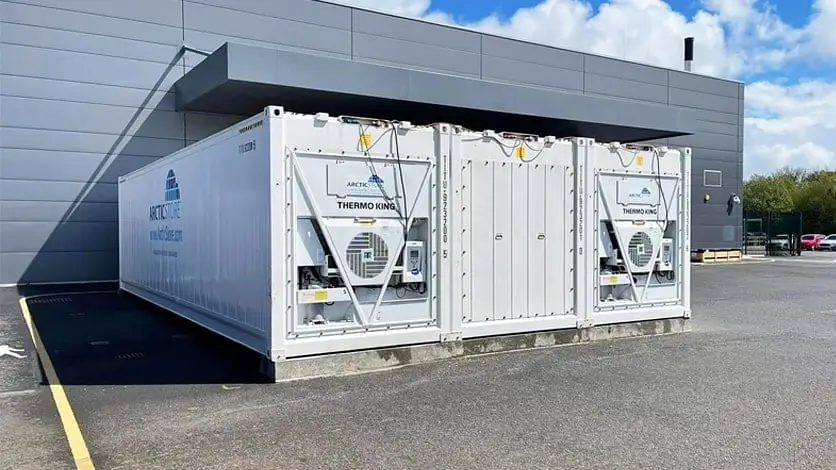
Our ArcticStore range includes 10ft, 20ft and 40ft units. Start with your peak stock level, then allow for airflow and access.
The smallest unit won’t always work out cheapest. If staff have to unload half the container to reach a pallet at the back, you’re paying for that time every day. But renting far more space than you need isn’t the answer either: it takes up room on your site and adds capacity you don’t use.
Compare the cost per usable pallet position, but only once you’ve agreed on a loading plan. Cold storage cost per square foot is fine for a first comparison, but it doesn’t show how much stock you can safely store.
Some jobs need a different kind of unit altogether. Rapid freezing, ultra-low temperatures and open-plan modular storage all require different equipment, so compare only the models that can handle the job you need.
A short project has fixed costs to spread over fewer days. Delivery and electrical preparation can make up a large share of a one-week rental, even when the rental rate looks modest.
For a longer project, energy use and contract flexibility matter more. Think about whether you might need extra capacity, a different temperature or an earlier collection date.
Our flexible rental terms help you plan storage around changing business needs. Ask us to price the period you expect, and to explain the options if your project runs longer.
Don’t compare a long-term advertised daily rate with a short-term quote until you’ve checked the commitment behind each. The headline number alone doesn’t show which contract you’re buying.
Electricity is usually charged by the kilowatt-hour (kWh). A unit’s electrical connection rating doesn’t tell you how much energy it will use each day, so use this calculation instead:
Estimated energy cost = kWh per day × number of days × price per kWh
That only illustrates the calculation: the inputs aren’t TITAN consumption figures, a local tariff or a rental quote. Many business tariffs also add a demand charge, a fee based on the most power you draw at any one time in a month. Other utility fees can also add to the bill.
When a supplier offers an estimate, ask what temperature, outdoor conditions, loading pattern and door use it’s based on. Two estimates are only comparable when those assumptions are similar.
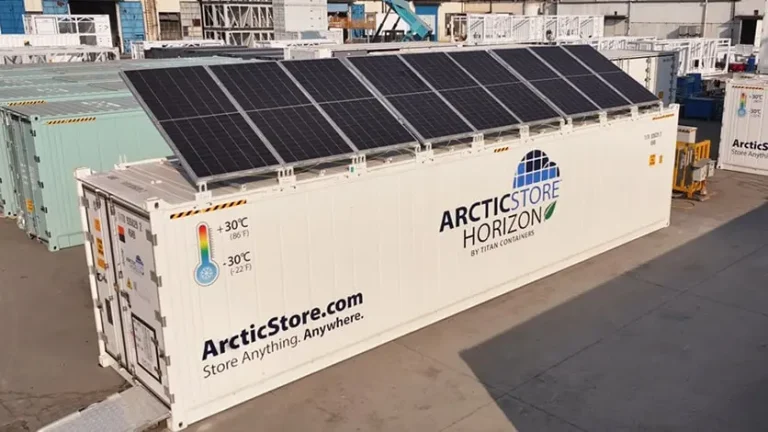
For longer projects, consider ArcticStore Horizon. It is our 40ft option built to use less energy with better insulation and solar panels – though it still needs an electrical supply.
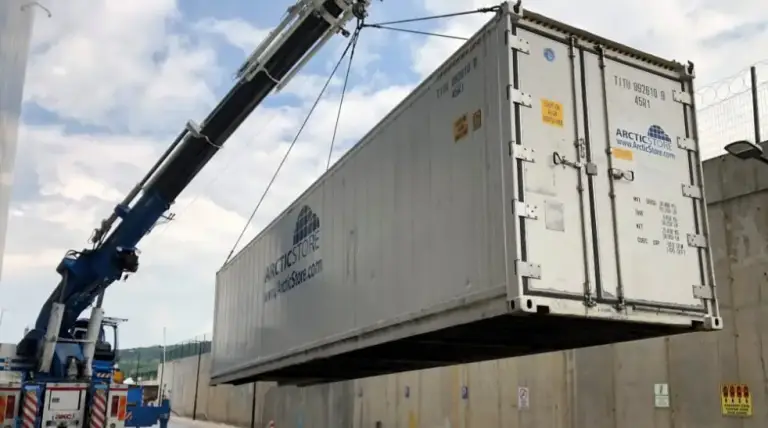
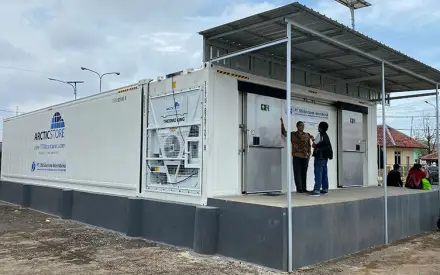
A container needs both a suitable position and a route to get there. For the most accurate quote, send photographs of the entrance, any turns, anything overhead and the place where it will sit – and say if there are limits on when deliveries can arrive.
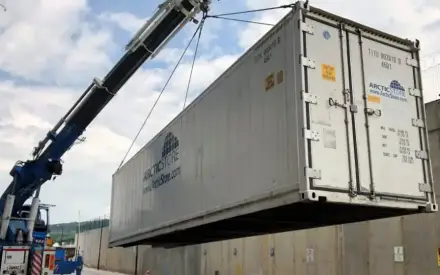
Read our container delivery guidance for tips, and make sure the groundwork is done before the container arrives, which means a firm, level base. Suppliers’ delivery fees typically include a set number of minutes for the truck and crane, and obstacles or an unprepared base that slow things down may push up the fee.
Check who’s arranging the power, and when it will be ready. A container that arrives before the electrical work is done can’t protect your stock on its own, so build in time to commission the unit before goods are due.
For each quote, add up three things: the cost of getting started (delivery, site preparation and electrical work), the expected recurring cost and the collection cost. Keep optional extras separate, so you can see what changes the total.
Then test one likely change. What if the rental lasts another month? What if your stock volume rises? What if the unit has to move to another site? Ask for the relevant contract terms, rather than assuming the starting rate covers every change.
The best value is the quote that keeps your stock at the right temperature for the whole rental, at a price you understand and on terms you can work with. Rental savings mean little if the layout slows your team down or the equipment can’t do the job.
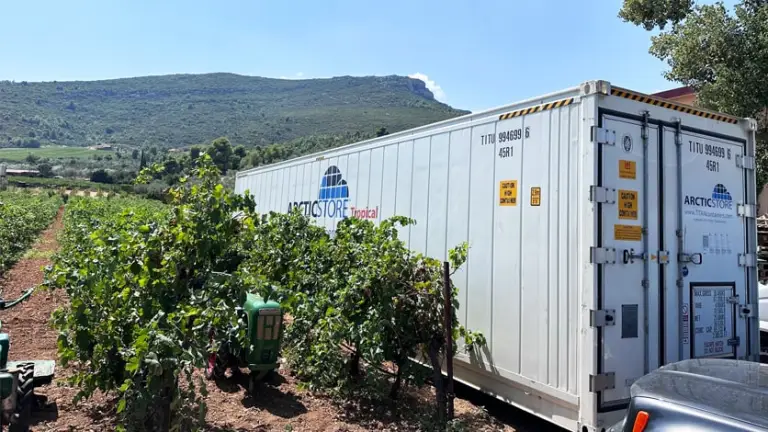
Send us your postal code, the product you’re storing, the temperature you need, your peak stock volume, your start date and how long you expect to rent. Include site photos and anything special about the cooling or access.
Request a refrigerated container rental quote, and we can help you compare suitable options and get the scope right from the start.
The total depends on the unit, job, location and rental term. For a clear idea of the container cost, request a quote that separates rental from delivery, collection, setup and other charges.
Not normally. The unit plugs into your site’s power supply, so budget for the electricity separately, and check the written quote to be sure. Agree who’s providing the power connection too.
No. On our published starting rates, a 40ft costs only about 10% more than a 20ft unit per day, so a bigger unit can work out cheaper per pallet position if you can fill it. Your own price depends on the model and the rental period, so compare quotes for each.
Because certain fixed costs remain, no matter how long you rent. Delivery, collection and site preparation are all required – and spreading them over fewer days pushes up the daily total.
Confirm the rate that will apply, how much notice you need to give and whether the unit you’re renting is still suitable. If you’re renting from us, tell us about any changes in stock volume or temperature, and ask for the extension details in writing so your operations and finance teams can work from the same dates and costs.

Josefine Falch is Global Marketing Manager at TITAN Containers, responsible for driving global marketing strategy, brand positioning, and lead generation across key industries and markets. With a strong focus on data-driven marketing, international campaigns, and cross-market alignment, she works closely with local teams to support commercial growth and strengthen TITAN’s presence worldwide.