How to choose the right cold storage solution for your business
Start by working out the job your cold storage has to do. A clear brief lets you compare your options properly and keeps you from paying for the wrong capacity.
Start by working out the job your cold storage has to do. A clear brief lets you compare your options properly and keeps you from paying for the wrong capacity.
Whether you work in the food sector, pharmaceuticals or retail, there’s a high chance that cold storage will be integral to the success of your business. In many cases, the cold storage plan you set up today will need to serve you for months or even many years. Getting it right is essential.
In this guide, we’ll explain what questions to ask to help narrow your search, give you a quick introduction to temperature control and more. TITAN has been in the cold storage business for around two decades, and our experts are always on hand to help with your questions.
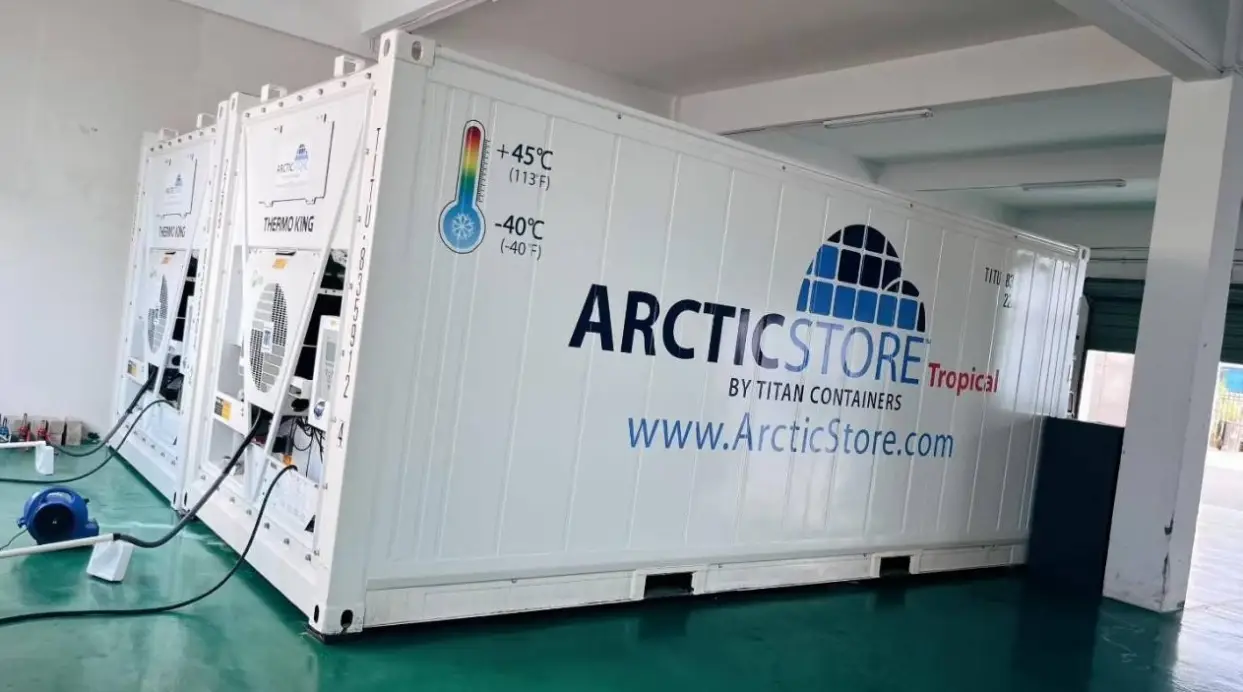
Everything in our cold storage collection is from our acclaimed ArcticStore range, which covers temperatures from -75°C to +45°C.
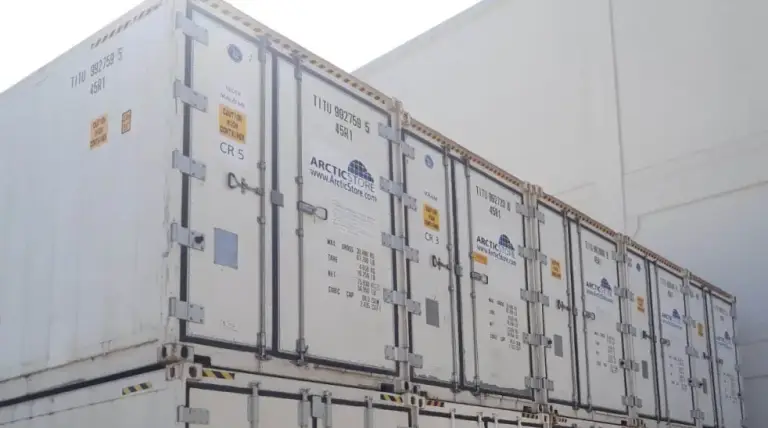
“We need a freezer” is a starting point, but it leaves a lot open. Will you hold goods that arrive frozen, or freeze a fresh batch? Will staff pick single cartons or move full pallets? Is the unit needed for a month or several years?
The answers affect the equipment and the layout you’ll need. This cold storage selection guide takes you from a first requirement to a brief you can send to suppliers.
Keep the brief short enough for your operations, facilities and quality teams to use, and settle any disagreements before you place the order. A container that suits the loading team but doesn’t reach the temperature you need isn’t a workable compromise.
There are three main ways to add cold storage, and the right one depends on how your stock moves.
A third-party cold storage warehouse holds your chilled or frozen goods at its own site, under a contract. It suits stock that doesn’t need to come back to your production area, though transport and handling costs matter as much as the storage price.
A built cold room is a permanent part of your premises. It suits a stable site with predictable demand, but it needs design, approvals and construction first, and you can’t take it with you if you move.
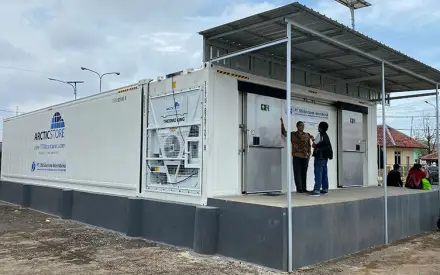
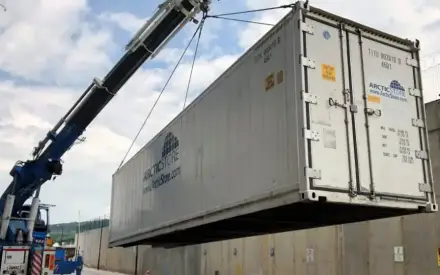
A refrigerated container is delivered to your site, so your cold space sits right where you use it, and you can add to it or change it as your needs change. This is what TITAN provides:
ArcticStore is our standard cold store. It runs from -40°F to +113°F, comes in 10ft, 20ft and 40ft sizes and suits most clients and industries.
ArcticBlast is designed for rapid chilling, freezing and tempering when you need to bring a warm batch down to temperature fast. It runs from -40°C to +45°C in 20ft and 40ft sizes.
Arctic UltraFreezer goes down to -103°F, in 20ft and 40ft sizes, for products such as vaccines and oily fish.
Arctic SuperStore and Arctic MegaStore are modular cold rooms, built from container modules for a larger, open-plan space. SuperStore combines ArcticStores and ArcticBlasts as needed, and MegaStore adds a second story.
We also offer a lower-energy option: ArcticStore Horizon, which comes with high-tech insulation and solar panels.
Note down three things about your product:
Your product specifications and operating procedures are the place to start.
Holding chilled stock is a different job from cooling something fast. In the same way, a freezer that keeps frozen goods cold can’t be assumed to take a warm batch down to temperature in the time you need.
If different products need different conditions, record them separately. One average temperature can’t cover two storage requirements that don’t go together.
If the cooling duty is already clear, ask us to review your storage brief before you settle on a size.
Plan for your peak stock on hand, not the number of pallets that pass through in a week. If deliveries arrive before dispatches go out, both loads may need space at the same time.
Here’s a simple example. Say you start the day with eight pallets, receive six and dispatch five later on. You need space for 14 pallets before the dispatch, even though only nine are left overnight.
Add space for goods waiting for checks, returns and picking. Then work out how you’ll load it, leaving room for air to circulate and people to get in. Don’t plan around the unit’s maximum pallet count, because airflow and access will take some of that space.

Draw the door, stock positions, picking route and handling equipment. Think through one normal delivery and one urgent retrieval.
If staff need individual cartons from lots of different pallets, leave a way to reach them. If goods move in full loads, a different arrangement may work. Shelf depth, pallet overhang and packaging all affect the usable space.
Ask these questions:
These details help you get the best use out of your cold space.
Check the ground, access route, where the unit will sit and power supply with whoever is responsible for the site. Allow for the delivery vehicle and the way the container will be lifted into place, not just the container’s footprint.
When you ask for a quote, send site photos and a marked plan if possible. Our container delivery guide explains the delivery day in detail. Agree on the required electrical specification you need before you book an electrician.
Think about the day-to-day location too. A position that looks convenient on a drawing can add hundreds of unnecessary journeys for your staff if it’s far from where they work. Put the cold space where it supports your workflow while still meeting the installation requirements.
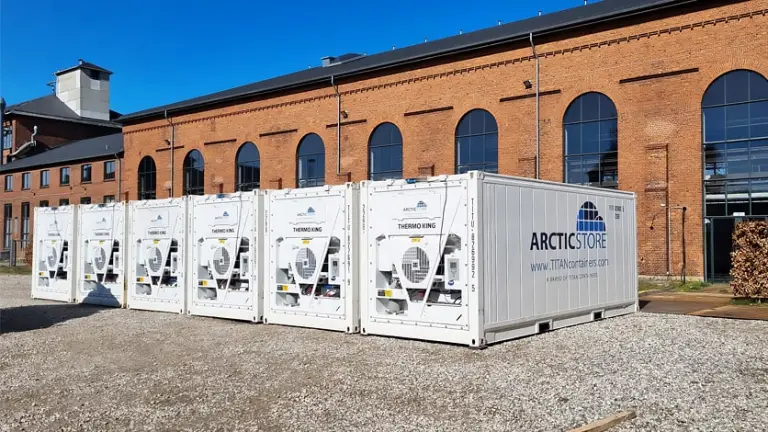
Committing to a permanent cold room ties you down, leaving little flexibility when things change – it’s something that cold storage buying guides sometimes overlook. An alternative that suits many businesses is to begin with a single container instead. They just add more units as their needs develop.
If your team needs a larger connected working area, consider Arctic SuperStore modular cold storage. Its open-plan format differs from placing several independent containers side by side, serving as a ‘cold warehouse on-demand’ that can be assembled much more quickly than a permanent cold room.
If renting, think about likely changes over the rental period. Will a seasonal peak end? Could the site move? Might a new product need another temperature zone? Choose a layout that can respond to the changes you can reasonably foresee.
Decide who owns the temperature checks and who responds to an alarm, and give the backup person the same access and instructions.
SmartArctic – available with most ArcticStores – gives you remote visibility and control of your cold storage. It’s worth agreeing how its records fit with your own product checks and quality procedures.
Decide in advance what happens if there’s a power outage, an equipment fault or a temperature problem, and write down who to contact, who to escalate to and how decisions about the stock will be made. A monitoring system only helps when someone can act on what it shows.
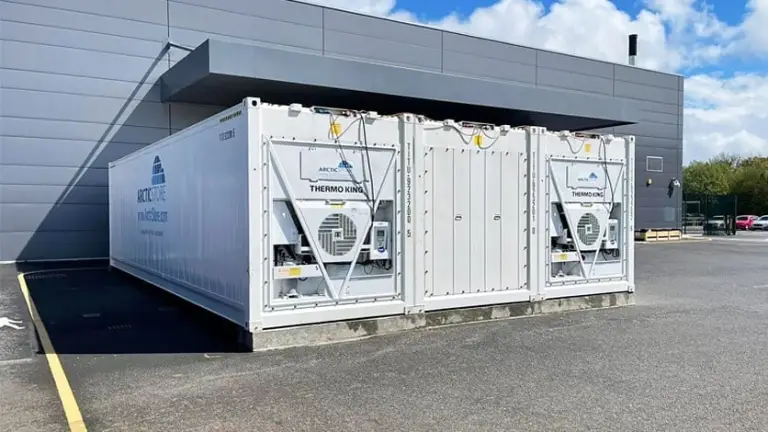
Ask every supplier to quote for the same job and the same length of time. Then compare the rental price, transport, electrical work, expected energy use, accessories and what happens at the end of the contract.
Check what service is included, and get it in writing. Don’t assume every supplier covers the same work or offers the same response times.
Here’s what to put in your brief:
| What to cover | What to tell the supplier |
|---|---|
| Product and duty | The goods, the temperature they can be stored at, the temperature they arrive at and the cooling they need |
| Capacity | Your peak stock, the size of your pallets or packages and how you pick |
| Site | The address, where the unit will go, photos of the access route and what power you have |
| Timing | When you need it, how long for and when it can be commissioned |
| Control | How you’ll monitor it, what records you’ll keep, who owns the alarm and what quality checks you need |
| Commercial terms | Delivery, collection, accessories, service and the options for changing the rental |
A brief like this gives suppliers enough to recommend a system you can actually use, which is more useful than choosing on size or headline price alone.
Put your acceptance criteria in the brief before you order. Each team needs something different. Operations may need a workable pallet route and enough picking space, facilities needs the agreed power and access arrangements, and quality needs evidence that the installation meets the product’s storage and monitoring requirements.
Bring those needs together into one readiness check. Note which checks can happen with the empty unit and which need to wait for the first normal load, and give each one an owner. That way, a delivery date doesn’t get mistaken for permission to start storing goods.
For example, a unit might be in the right place and cold, but the night shift might not have monitoring access yet. Fix that before you rely on an overnight alarm response. Small handover details decide whether the equipment is useful from the first day.
After the first busy period, go back to the brief. Note any bottleneck in receiving, access or stock placement while it’s fresh in your mind, which makes the next capacity decision easier and helps your team improve the current setup.
Send us the details above and tell us what is driving the need for extra space. When you request a cold storage quote, our team will help match the brief to the right TITAN solution.
We have around two decades of cold storage expertise and 40+ yards across the US and Canada, and our clients include Sonoco, Coca-Cola and Tesco.
Start with your product’s temperature and the cooling job it needs. Then check your peak volume, how you’ll handle the stock and what your site can support. Those answers narrow the options.
Plan for the peaks you know about and the changes you can reasonably expect. Then weigh the cost of spare capacity now against the option to add or change units later.
Tell us your product, target temperature, peak stock, location, start date and how long you need it. Add photographs if that will help us, plus details of any rapid cooling or special monitoring you need.
It depends on temperature and access. One shared space can suit compatible bulk stock, while separate units can split jobs, product groups or temperatures. Compare the total footprint, the power arrangements and how staff will move around. If you want a connected working area, look at a modular layout, because separate containers side by side aren’t the same as an open-plan room.
Yes, you can shortlist models, but finalize your choice once you have the site plan. The delivery route, ground, power and clearances can all affect what works. Share those details early, so the unit and the site preparation move together and a mismatch doesn’t turn up on delivery day.

Josefine Falch is Global Marketing Manager at TITAN Containers, responsible for driving global marketing strategy, brand positioning, and lead generation across key industries and markets. With a strong focus on data-driven marketing, international campaigns, and cross-market alignment, she works closely with local teams to support commercial growth and strengthen TITAN’s presence worldwide.